


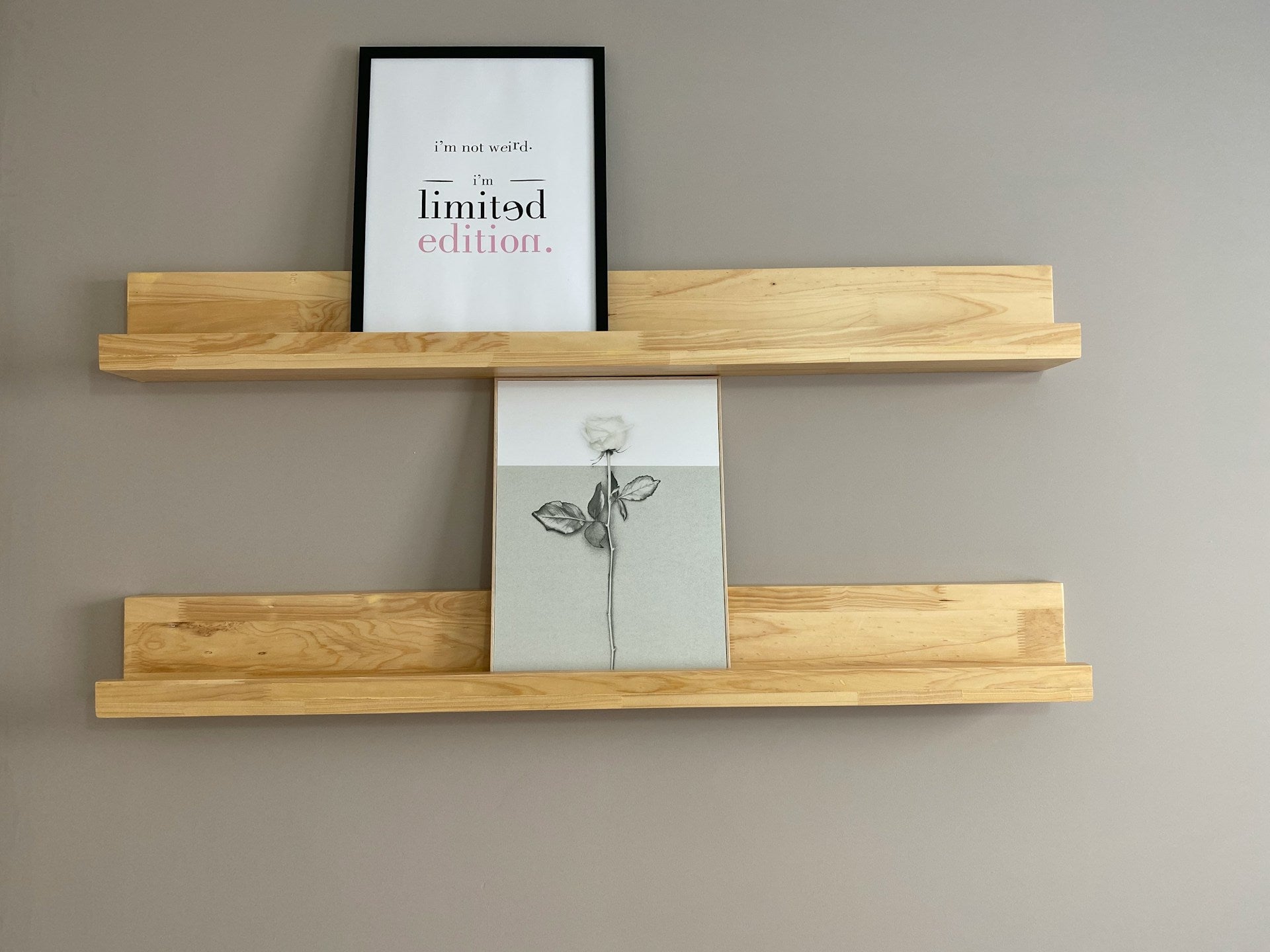
Built-in Magic From Simple Minimalist Wood Shelves
Minimalist wood shelves can look like true built-ins, or they can look like boards someone screwed into the wall at the last minute. The difference usually comes down to tiny details that most people never notice by name, but always feel in the finished room. When you get those details right, even a simple summer kitchen or living room refresh can feel like custom millwork.
We spend our days building solid hardwood shelves that are meant to live in high-end spaces, so we obsess over those details. Edge profiles, clean shadow gaps, end returns, and hidden hardware are what make a run of minimalist wood shelves feel calm, intentional, and architectural, not just decorative. Let us walk through each piece so you can plan shelves that truly belong in the room.
Edge Profiles That Quietly Elevate Minimalist Wood Shelves
Edge profiles are just the shape of the front edge, but they set the whole mood. A shelf can read chunky, light, soft, or sharp, all based on that one line your hand touches every day.
Some of the profiles we lean on most often are:
- Square eased edge, a clean square with the sharpness slightly softened so it feels good to touch and holds up over time, perfect for Scandi and Japandi spaces
- Micro-bevel or softened arris, a tiny bevel that creates a thin shadow line along the front, great in modern kitchens and long living room walls
- Bullnose and gentle round-overs, a more curved edge that feels friendly in family areas without slipping into a dated look
Thickness matters too. A front edge around 1.75 to 2.25 inches usually feels right above a range, a long counter, or a wide hallway. In a small nook or compact bathroom, a slimmer 1.25-inch front can keep things feeling light and balanced. The trick is to think about:
- Ceiling height
- Shelf depth
- Nearby cabinet door rails and stiles
When those proportions relate to each other, you avoid that “big plank on the wall” look.
Craft is what makes any profile feel refined. We pay attention to:
- Consistent edge work along both long grain and end grain
- Smooth sanding that blends every transition
- Natural finishes or hardwax oils that keep the profile crisp
We stay away from thick, plasticky polyurethane because it tends to round over fine edges and cover the feel of real wood. With solid American hardwood, we want the shelf to feel like furniture, not like plastic.
Shadow Gaps That Make Shelves Look Architect-Designed
A shadow gap is a small, planned reveal between the shelf and the wall or nearby cabinetry. It is usually just a thin, dark line, about the width of two stacked quarters, but it makes a huge difference in how “built-in” your minimalist wood shelves feel.
A tiny 1/8 to 3/16-inch gap looks intentional and calm. A joint that is tight in some spots and wider in others looks like someone fought the wall and lost. In kitchens, a shadow gap above tile or a backsplash:
- Keeps you from chasing cracked caulk lines later
- Lets the shelf float visually over the surface
- Gives steam and light a place to breathe so the run looks lighter
In living rooms or offices, that same reveal can separate the shelf from wall paneling or a fireplace surround while still feeling connected to the architecture.
To keep that dark line even from left to right, installation has to be precise. This is where the Hovr Bracket System (Classic and Slim) helps. The male/female interlocking system lets us micro-adjust so the shelf sits dead level, which keeps that gap consistent. Most walls are not perfectly flat, so we decide whether to
- Scribe the wood to the wall for a tight fit
- Or hold a clean, controlled gap that looks straight from normal viewing distance
Summer is a great time to tune these details, since spring wall work has usually had a chance to settle and dry.
End Returns and Wall-to-Wall Minimalist Wood Shelves
End grain is the face you see when you look straight at the cut end of a board. Left raw against a painted wall, it can make even nice wood look like simple lumber on brackets. End returns solve that.
An end return wraps the front profile around the corner so the shelf reads as one continuous piece. Depending on your style, there are a few approaches:
- Clean exposed end with a furniture-grade finish, honest and modern, letting the figure of White Oak or Walnut show
- Mitered end returns, where the front edge and side meet at a tight angle, giving a waterfall effect and hiding small gaps at the wall
- Wall-to-wall runs, where we template the opening, then scribe the shelf ends so they terminate cleanly into the side walls or panels without breaking the front profile
Style plays a big role here. Mid-century modern often embraces clean, visible end grain, especially in long runs above a credenza. Japandi and Scandi spaces often feel better with a fully wrapped front and end, more quiet and luxurious, less like exposed construction.
Getting these joints to disappear means paying attention to grain direction and color. With solid hardwood, we can shape, miter, and sand the return so the grain flows naturally around the corner. That is something veneer or particle board just cannot handle the same way.
Hardware Concealment and the No-Sag Floating Effect
If you have seen floating shelves slowly tilt down over time, you have probably seen the limits of traditional 2-prong rod brackets. Those standard brackets tend to slant and sag with heavy plates or books, and they force you to hope your wall studs land exactly behind your design.
We work with the Hovr Bracket System (Classic and Slim) because it disappears into the wood and solves those problems. The system uses a male/female interlocking system:
- The male 6063 T6 aircraft-grade aluminum bracket mounts to the wall
- The female bracket is embedded into the shelf
- A set screw locks the two together into a single, rigid unit
Once installed, the hardware is invisible. You just see a clean line of wood floating on the wall, which is exactly what most minimalist wood shelves are trying to achieve.
The Classic Hovr Bracket System is rated with an average 300-pound load capacity at an 8-inch depth and is described as 13x stronger than standard floating shelf brackets. That industry-leading strength underpins a true no-sag guarantee: the interlocking design creates a rigid connection that cannot sag or tilt over time, in sharp contrast to traditional 2-prong rod brackets slanting under weight.
That strength translates into real safety in daily life:
- Heavy dinnerware in a busy kitchen
- Massive book collections in a study
- Styled objects in a high-traffic living room
Because the bracket runs continuously across the back, the installer can hit studs anywhere along the wall while still placing the shelf exactly where the design calls for it. That solves the usual "studs-not-where-you-want-them" headache. The Slim Hovr Bracket System gives the same no-sag, no-tilt performance for thinner shelves, so you can keep the look light without giving up strength or safety.
Finishes, Light, and Styling That Complete the Built-in Look
Once the structure and detailing are set, finish and light bring everything together. On long minimalist wood shelves, species like White Oak, Walnut, and Maple each tell a different story. White Oak feels architectural and calm, Walnut adds depth and warmth, and Maple stays light and clean.
We like natural finishes and hardwax oils because they sink into the wood fibers and harden from within. That keeps the shelf feeling like wood, not plastic, and lets edge profiles and end grain stay crisp. Cheaper polyurethanes tend to sit on top, yellow over time, and make everything look mass-produced. With White Oak, if we adjust color, it is usually to fine-tune undertones while keeping the grain visible and strong.
Summer light in a kitchen or living area can be very direct, then soft by evening. To keep shelves looking good all day, we think about:
- How sunlight will hit shadow gaps and edge profiles
- Using mostly matte or low satin sheen to avoid glare
- Placing shelves where grain catches light without blinding reflections
Styling matters too. Minimalist wood shelves look most built-in when they are not packed edge to edge. We like to:
- Keep heavier items closer to where studs likely run
- Leave pockets of open space to echo the clean lines of the shelf
- Repeat tones, like black metal or ceramic, to tie back to shadow gaps and hardware concealment
When edge profiles, shadow gaps, end returns, hidden Hovr hardware, and calm finishing all work together, a simple run of minimalist wood shelves stops looking like an add-on and starts feeling like part of the architecture. At The Mortise & The Hare, we build made-to-order solid hardwood shelves around these details, using sustainable American hardwoods, professional-grade finishes, and the Hovr Bracket System (Classic and Slim) to keep everything straight, safe, and strong over time.
Transform Your Space With Thoughtfully Crafted Shelving
Bring warmth, function, and quiet style into your home with our handcrafted minimalist wood shelves. At The Mortise & The Hare, we carefully select solid hardwoods and simple, enduring designs that let your favorite pieces stand out. If you need help choosing sizes, finishes, or layouts, you can contact us and we will walk you through every step.
Share:
How to Choose Wall Anchors and Stud Patterns for Heavy-Duty Shelves