



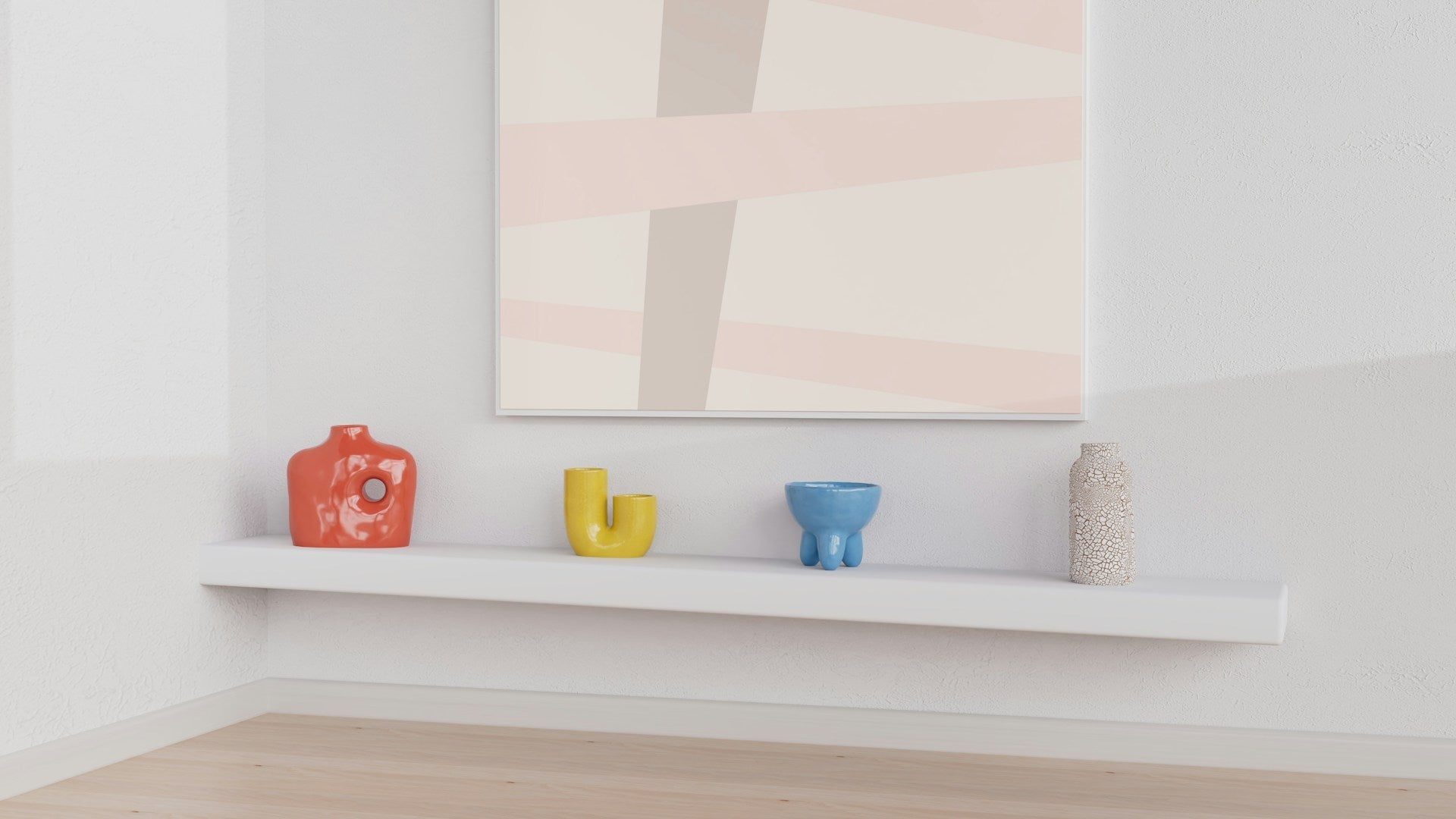
Bringing Craftsmanship Back to Custom Floating Shelves Online
Ordering custom floating shelves online should not mean settling for hollow boxes that sag in a year. Many shelves that look great in photos are thin veneer wrapped over MDF or particle board, hanging on light hardware. At first they seem fine, but over time you see the edges chip, the finish peel, and the whole thing start to tilt.
We take a different path. Our shelves are built like real furniture, from solid American hardwood, one piece at a time. We hold them to the same standard we want in our own homes, from the lumber we pick to the brackets we trust in the wall. Our goal here is to help you understand how to order shelves online without giving up strength, beauty, or safety, especially as late summer nudges you to get the house ready for fall gatherings and holiday guests.
Why Solid Hardwood Matters More Than Photos Online
A styled photo can make almost anything look good. The real test is what happens when you touch the shelf and live with it every day. Solid hardwood feels different in your hand, sounds different when you set something down, and ages in a way veneer never can.
Here is the basic difference:
- Solid hardwood is one piece of real wood, all the way through
- Veneer is a very thin slice of wood glued over a cheaper core
- MDF and particle board are wood fibers or chips pressed with glue
With solid hardwood, you see real end grain, real figure, and natural color depth. If it gets scratched, you can lightly sand and re-oil. With veneer, you only have a paper-thin layer before you hit the core, so damage is often permanent.
We work most with four American hardwoods:
- Walnut: Rich brown, flowing grain, perfect for Mid-Century Modern and moody Minimalist spaces
- White Oak: Warm, calm grain that suits Japandi and Scandi interiors, great when you want soft, airy warmth
- Maple: Light and clean, with a subtle grain that feels very modern and bright
- Red Oak: Classic, visible grain for people who like a little more movement and character
Solid hardwood also holds screws and brackets better than particle cores and is more resistant to edge chipping. Because we use domestic lumber, the movement across seasons is more predictable, which matters in places with humidity swings and heating cycles.
Reading the Grain From a Screen When Ordering Online
You might wonder how to judge real wood through a laptop or phone. There are a few clues that help you tell if a shelf is truly solid hardwood.
- Clear species names, like Walnut or White Oak, not just “wood look”
- Real board photos where you can see end grain and natural variation
- Descriptions that mention thickness as solid, not “veneer over core”
Inside the shop, we select and lay out boards so the grain flows across a wall run. We avoid pith, the soft inner core of the tree, to help keep shelves flat. When we can, we bookmatch or at least keep grain direction consistent, so a set of shelves feels like a family, not a random mix.
Sizing details matter more than people think:
- Thickness: A true 1.75-inch-thick solid shelf reads heavier than a thin box, and it feels more grounded
- Depth: Everyday dinnerware usually wants around 10 inches; deeper shelves hold large platters or art books
- Length: The longer the span, the more important both the material and the bracket system become
If you share room photos and dimensions, we can talk through proportions. Sometimes trimming an inch off depth or stepping the lengths creates a layout that feels designed instead of stuck wherever there was open wall.
Hardware and Installation That Put Safety First
Strong wood still needs strong hardware. We only use the Hovr Bracket System, both Classic and Slim, on every floating shelf we build. It is a male and female interlocking setup: the male bracket mounts across multiple studs in your wall, and the female bracket is embedded inside the shelf.
The brackets are made from 6063 T6 aircraft-grade aluminum, which gives high strength without bulk. The two parts slide together and then lock with a setscrew. That connection creates a rigid, no-sag joint that will not slowly tilt like simple 2-prong rod brackets.
The results you feel at home:
- Industry-leading strength, rated around 300 pounds for an 8-inch-deep Classic bracket
- Safe support for stacks of plates, big ceramic bowls, heavy books, and speakers
- Peace of mind when kids lean, bump, or grab the edge
Because the male bracket spans multiple studs, we can often place a shelf exactly where you want it, then fasten into solid framing even if the studs are not centered on your layout.
For installation, the sequence is simple for someone who is comfortable with basic tools:
- Find studs with a stud finder, then confirm with a small test hole
- Level and mount the male Hovr bracket with structural screws into as many studs as possible
- Deal with minor wall waves by shimming behind the bracket so the face is flat
- In tile areas, drill clean holes through the tile into the studs before setting fasteners
Once the male bracket is in, the shelf with the female bracket slides on. Tightening the setscrew locks everything as one solid unit. If you or your installer can hang cabinets, you can handle this system.
Finishes and Design for Real Rooms
A good finish should make wood feel better, not like plastic. That is why we like hardwax oils like Rubio Monocoat and Osmo. They soak into the fibers, leave the grain open to the touch, and keep a natural, low-sheen surface that fits Japandi, Scandi, and Minimalist styles.
Compared to cheap, high-build polyurethanes, hardwax oils:
- Keep the shelf feeling like wood instead of a plastic shell
- Are easier to spot repair if you get a scratch or water ring
- Age slowly, gaining character instead of peeling or cracking
We usually keep finishes natural or lightly toned to let Walnut, White Oak, Maple, and Red Oak speak for themselves. The exception is when someone wants a specific tone on White Oak. In that case, we talk through stain choices that keep the grain visible rather than burying it.
Designing shelves for real life starts with how you actually use the room:
Kitchens:
- Pair shorter runs on each side of a range hood
- Hide outlets for a microwave or speakers under a shelf
- Keep daily dishes at eye height and serving pieces higher
Living rooms and offices:
- Span part of a TV wall for books and art, without overloading the whole space
- Create a small reading or display nook with two or three aligned shelves
- Leave pockets of negative space so objects have room to breathe
Bathrooms and tight spots:
- Choose slimmer depths so a narrow room still feels open
- Use Maple or White Oak to reflect light and calm the space
- Keep styling simple, with repeated materials and colors
When you are ready to order custom floating shelves online, a simple checklist helps: measure width, depth, and thickness; choose your species; then pick Classic or Slim Hovr based on depth and what you plan to store. Share photos, floor plans, and inspiration, and we can respond like a design partner, making sure your shelves feel like heirloom furniture that just happens to be ordered from a screen.
Get Started With Your Project Today
Bring your design ideas to life with The Mortise & The Hare by exploring our handcrafted custom floating shelves online tailored to your space and style. We carefully select each board, finish, and detail so your shelving feels intentional, not off-the-shelf. If you have questions about sizing, wood species, or installation, simply contact us and we will help you plan the right solution for your home.
Share:
USA-Made Custom Floating Shelves: Lead Times and What "Made in USA" Means
USA-Made Custom Floating Shelves: Lead Times and What "Made in USA" Means