



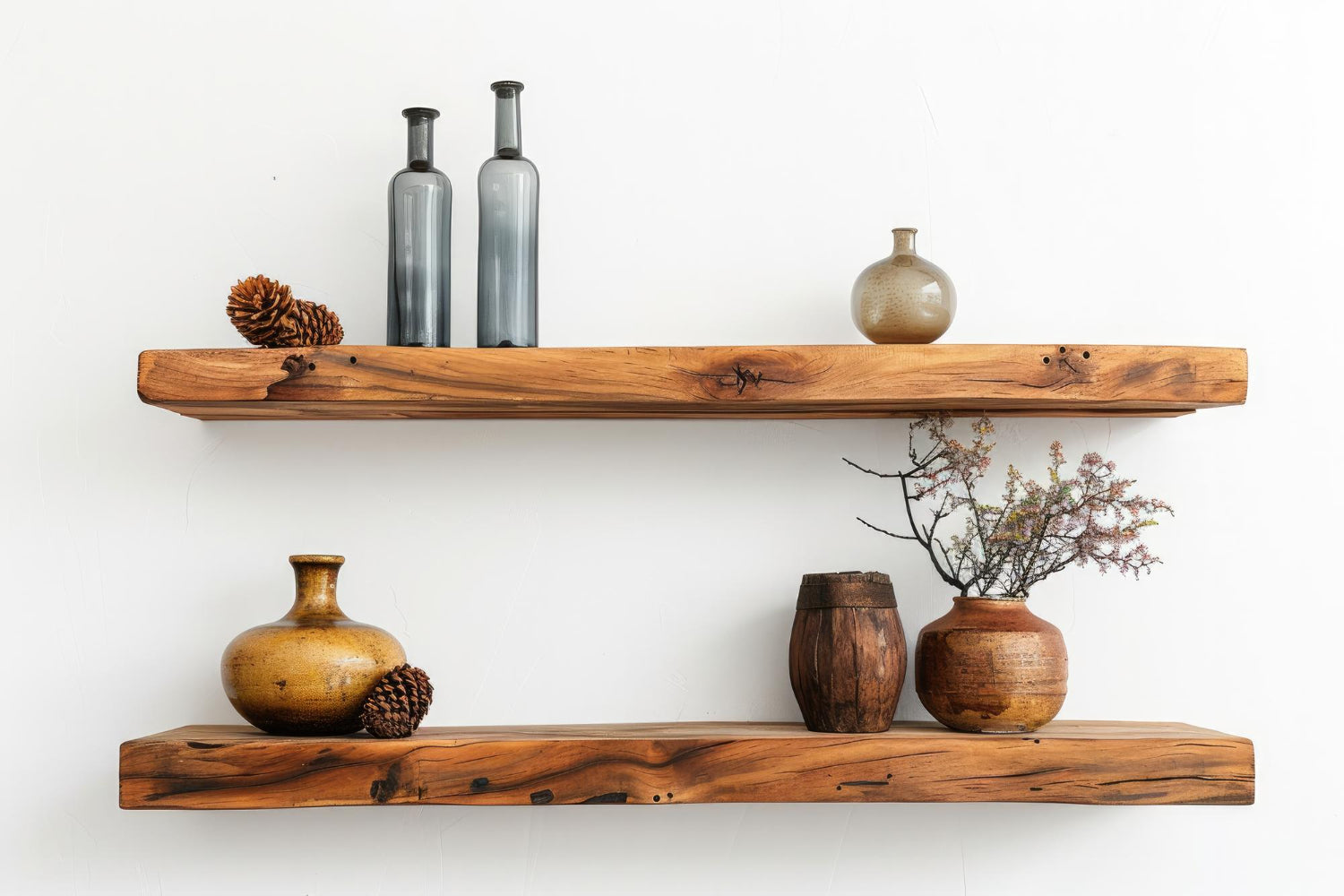
Make Small Rooms Feel Bigger with Thoughtful Shelving
Small spaces can work hard for you if you plan them well. When every inch matters, like in New York apartments, compact condos, and tight galley kitchens, the wrong storage can make a room feel cramped fast. Floating shelves for small spaces help open up the walls, keep the floor clear, and still give you a place to put the things you actually use every day.
We like to think of solid hardwood floating shelves as both architecture and tool. They frame the room, hold your dishes and books, and change the way light moves through the space. Late winter is a great time to rethink all of this. The holidays are over, the days are still short, and many people are staring at the same crowded cabinets, wishing the room could breathe. As custom furniture makers, we plan each shelf like a built-in: around studs, proportion, and the way you really cook, live, and move.
Rethinking Storage in Tight Kitchens and Living Rooms
Small rooms come with familiar headaches. You might have:
- A narrow galley kitchen with only one clean wall
- Short bits of wall squeezed between windows or doors
- Radiators, baseboard heaters, or awkward corners
- An open living room with almost no full-height wall to anchor storage
Instead of wrapping every inch in upper cabinets, try floating shelves for small spaces on one main wall. Removing uppers on even a single run and replacing them with open shelves can change the whole mood. The room feels taller, lighter, and less boxed in. Stacking shelves up toward the ceiling or bridging a gap between two cabinets creates a tailored, custom look without adding bulk.
Visual lightness is the key. Cabinets are boxes, so they project out and stop your eye. A solid wood shelf with a clean underside keeps your sightlines open. You see more wall, more light, and more negative space. That empty space around and above the shelves matters, especially with low winter light. When there is some breathing room around your objects, the wall reads as calm, not noisy.
Choosing the Right Wood, Thickness, and Depth
The wood itself has a big impact on how a small room feels. Different species give off different moods:
- White Oak with a natural finish or light oil feels warm but not heavy
- Walnut brings rich contrast in a bright white kitchen or living room
- Maple reads fresh and modern with a clean, simple grain
Depth is another big decision in a compact space. For most kitchens, 8 to 10 inches works well for glasses, bowls, and dinner plates without sticking too far into the room. For a spice run, small art, or a coffee station, 6 to 7 inches can be enough and keeps walkways generous. For books and media in a tight living room, 10 to 12 inches gives you function without making the wall feel like it is leaning toward you.
Thickness and proportion are where a shelf starts to feel architectural. A face around 1 3/4 to 2 1/4 inches looks solid and intentional. Paired with the right depth and a wall color that supports it, it can still feel light and quiet. Grain and figure also matter. Straighter grain feels calm and modern, while more active figure turns the shelf itself into a focal point. In a small room, that choice is important, because every detail gets noticed.
Getting Serious About Strength, Studs, and Safety
Pretty shelves are not enough if they sag under a stack of plates. Standard floating shelf brackets often depend on simple rods sliding into the shelf. Over time, those rods can flex, and the shelf can tilt or droop, especially if it is deep or fully loaded with stoneware, heavy cookbooks, or pantry jars.
At our shop in New York, we pair solid hardwood with a patented Male/Female Interlocking System. The male bracket mounts to the wall and can span several studs. The female side is embedded inside the shelf itself. The two pieces lock together with a set screw, so the shelf and bracket act as one rigid piece that cannot sag or tilt.
That design also solves a common small-space problem: studs never seem to be where you want the shelf. With this bracket, we can achieve secure stud installation anywhere along the wall while still centering the shelf exactly where it needs to be. The Classic bracket at 8 inches deep is rated at an average of 300 pounds, which is about 13 times stronger than standard brackets. For a busy household, that kind of strength is really a safety feature, not just a nice-to-have.
Designing for Small Spaces Without Visual Clutter
Once the structure is right, the layout and styling keep the wall from feeling busy. A few simple rules help:
- Align shelves with existing lines like window heads, door trim, or cabinet tops
- Keep consistent spacing between shelves so the stack feels planned
- Limit how many shelves go on a single wall to avoid a striped look
On the styling side, think in clusters instead of long rows. Closed baskets or boxes can hold small items that do not need to be seen. Group plates together, stack bowls, or line up glassware in one section, then leave a clean stretch of open shelf beside them. That open space gives your eye a place to rest, which is critical in compact kitchens, entryways, and small living rooms.
Color and contrast matter as well. If you want the room to feel calm and blended, choose a wood tone that is close in value to the wall. If you want the shelves to read like an intentional architectural feature, pick a darker or richer species so the lines stand out. In late winter and early spring, shelves often carry extra load, like mugs, pantry staples, or seasonal decor. A thoughtful layout keeps the wall looking calm even when every shelf is fully used.
Planning Your Layout Like a Pro
To plan floating shelves for small spaces, start with a simple method:
- Measure wall width and ceiling height
- Mark stud locations and note switches, outlets, or vents
- Sketch the wall to scale on graph paper or in a simple design program
From there, think in zones instead of isolated boards. One run might hold everyday dishes near the dishwasher. Another could be dedicated to display or cookbooks, and a narrow run might live near the coffee maker. Grouping shelves into clear zones keeps the room from feeling scattered.
This is where working with a designer or a maker becomes helpful. Together, you can match species, thickness, depth, and bracket layout to the way the room is actually used. It also pays to think a few steps ahead. You might leave space for a future extra shelf, plan wiring for a sconce above the shelf wall, or set the bracket layout so it will work nicely with tile or wall paneling later on.
Bringing Architectural Floating Shelves Into Your Small Space
In a compact room, floating shelves are not just decoration. They are structural storage that has to earn its place in both strength and style. When solid hardwood is paired with a high-capacity Male/Female Interlocking System, you get rigid, sag-free shelves that can tie into studs anywhere along the wall and stand up to real daily use.
At The Mortise & The Hare, we build custom floating shelves in New York that are meant to feel like they have always belonged in the room. As winter starts to give way and you plan spring updates, thoughtfully designed shelves can replace cluttered cabinets and flimsy hardware with something that feels intentional, calm, and lasting, even in the smallest spaces.
Transform Your Small Space With Custom Storage That Fits Your Style
If you are ready to make every inch of your home work harder, we can help you design and build floating shelves for small spaces that feel intentional and beautifully finished. At The Mortise & The Hare, we craft solid hardwood shelving sized to your walls, your storage needs, and your aesthetic. Tell us what you are working with and we will recommend shapes, depths, and finishes that keep clutter off your surfaces without crowding the room. Have questions or need a custom idea reviewed before you order, just contact us and we will walk you through the options.
Share:
Floating Shelf Load Ratings: Wall Type, Stud Spacing, and Bracket Design
Common Floating Shelf Hardware Mistakes Designers Regret