
When Shelf Safety Is a Real Safety Issue
Shelf safety is not just about pretty styling; it is about what happens when those shelves are full and life gets busy. Summer is when kitchens work harder, home offices get reorganized, and kids are home pulling on anything they can reach. If your shelves are not built and mounted for the real weight you plan to put on them, things can go bad fast.
Heavy dinnerware, art books, stoneware, plants, even stacks of records all add up. When that weight sits on thin brackets or floating shelves screwed into drywall anchors alone, you are asking the wall to do a job it was never meant to do. Here, we want to walk through how to choose between heavy-duty wood wall shelves with exposed brackets and modern floating shelves, based on your wall type, your studs, and your actual load.
Why Wall Type and Stud Layout Come First
Before anyone talks about shelf style, we think about the wall itself. Different walls change what is safe, how we fasten, and sometimes what kind of shelf we will even agree to build for that spot.
Common wall types include:
- Drywall over wood studs
- Plaster and lath in older homes
- Masonry or concrete walls
- Mixed situations, like drywall over old plaster patches
Drywall with studs is common in newer homes, but “just find a stud and screw it in” is only part of the story. Studs may be spaced irregularly, shifted around windows, or broken up by pipes and wires. You might want a shelf centered on a sink or art piece, but the stud is six inches off. If we cannot hit enough structure, the load rating drops fast.
From a maker’s point of view, when we arrive at a wall, we:
- Check for studs across the full shelf span
- Look for blocking or signs of old repairs
- Test with a stud finder, small pilot holes, and a bit of common sense
If the wall is weak, patched, or full of surprises, we may steer you to a different style or shorter span. Sometimes safety wins over a clean, bracket-free look.
When Heavy-Duty Wood Wall Shelves with Brackets Are Smarter
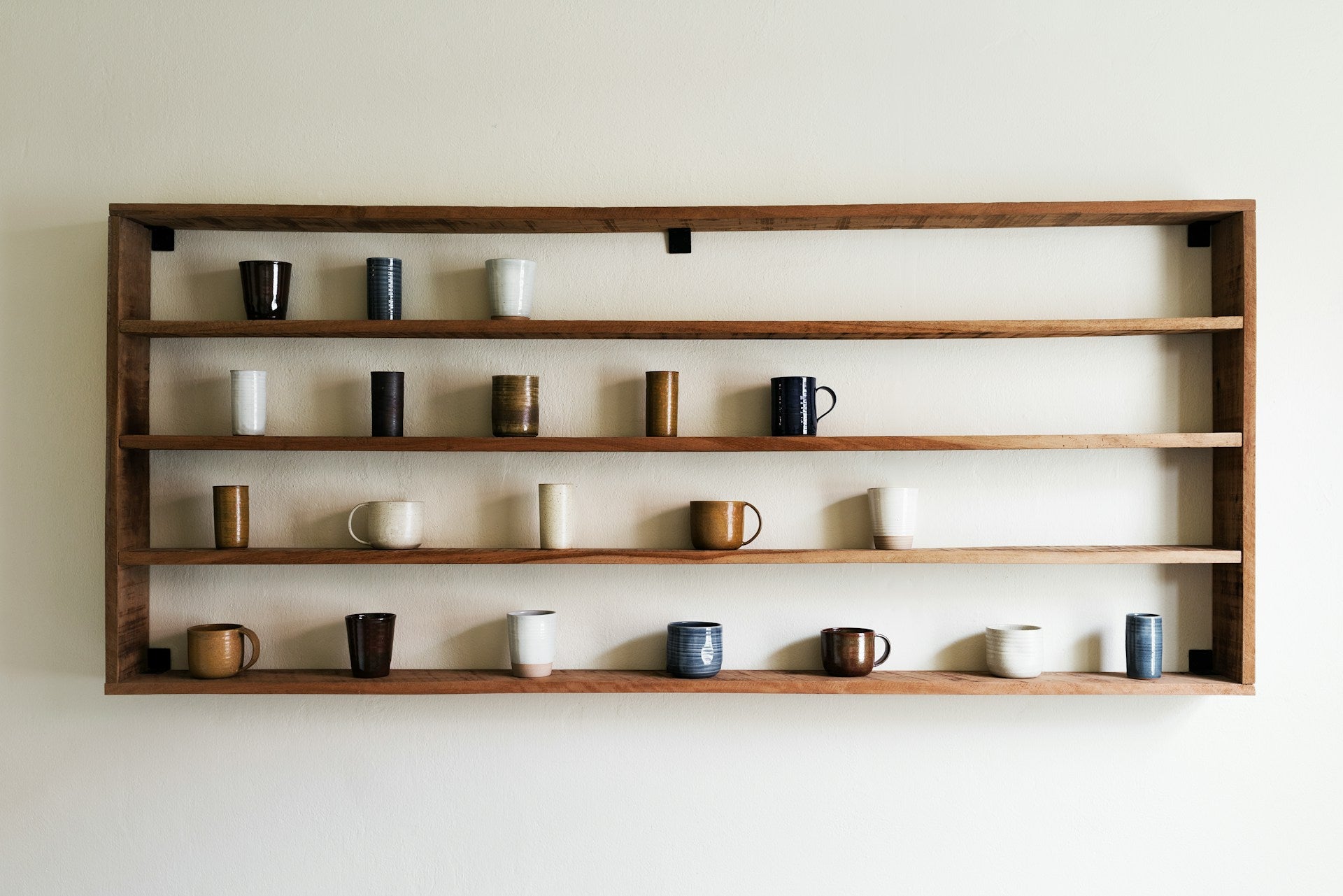
Heavy-duty wood wall shelves, the way we mean it, are solid American hardwood boards supported by visible structural brackets or corbels. These are not tiny decorative tabs. These are real supports designed to carry serious weight on deeper or longer shelves.
Exposed heavy-duty brackets shine in a few key situations:
- Long spans where studs are not in perfect spots
- Extra deep shelves that stick out far from the wall
- Commercial or high-traffic spaces
- Very heavy loads, like cookbooks, cast iron, records, or stoneware
The bracket style matters as much as the shelf. Continuous bracket rails or heavy brackets with multiple screws into multiple studs are far safer than a few small, pretty brackets hung into drywall. We like to:
- Space brackets so every stud we can reach is doing work
- Use the right screw length for the wall and load
- Test with body weight or sandbags before you style the shelf
There is an aesthetic tradeoff here, but you can lean into it. Choose bracket finishes that echo your hardware, light fixtures, or appliances. Match bracket scale to shelf thickness so it looks intentional, not tacked on. A steady rhythm of brackets across the wall can feel like part of the architecture, especially in kitchens and home libraries.
When True Floating Shelves Are Just as Safe
Floating shelves get a bad name because many people know the hollow, flimsy kind that sag and twist. That is not what we build. A true floating shelf starts with a thick, solid hardwood body and serious concealed hardware.
We pair our shelves with the Hovr Bracket System, both Classic and Slim. In plain shop language, it is a male and female interlocking setup made from 6063-T6 aircraft-grade aluminum. The male bracket mounts to the wall and can straddle several studs in a row. The female bracket is embedded inside the shelf. The two lock together with a set screw, so shelf and wall behave like a single, rigid piece.
That gives two big safety benefits:
- Industry-leading strength, with the Classic bracket averaging 300 pounds at an 8-inch depth, about 13 times stronger than standard brackets
- A no-sag connection that will not slowly tilt the way two-prong rod brackets do over time
For busy family kitchens, kids’ rooms, or anywhere people bump into things, that rigid, no-tilt behavior is a big deal. The long Hovr bar also solves a classic problem: studs are almost never right where you want the shelf visually. With a continuous bar, we can catch studs anywhere along the wall, then still place the shelf exactly where your design calls for it.
Matching Shelf Type to Room, Load, and Wall Reality
So how do you decide between heavy-duty wood wall shelves with visible brackets and floating shelves supported by Hovr? We think through three lenses: room, load, and wall condition.
By room:
- Open kitchen shelving: Floating Hovr shelves work well for everyday dinnerware and glasses. Extra deep runs full of cast iron often do better with visible supports.
- Home libraries: Long walls of books often call for a mix, heavy-duty brackets on the longest spans, Hovr floating units for shorter accent runs.
- Bathrooms: Light to medium loads, like towels and small decor, are perfect for floating shelves, especially when space is tight.
- Entryways: For bags and heavy hooks, we may lean toward visible brackets or shorter floating shelves on very solid walls.
By load, we usually think in three simple bands:
- Light: A few teacups, small plants, framed prints
- Medium: Everyday dishes, small stacks of books, pantry jars
- Heavy: Stoneware sets, big art books, records, cast iron
Light loads are very forgiving. Medium loads ask for real structure. Heavy loads should be planned like furniture, not decor, with hardware chosen to match.
If walls are unknown, uneven, or clearly patched, we may:
- Shorten shelf spans
- Increase bracket count
- Shift from floating to visible support for peace of mind
Summer is a smart time to sort this out, before holiday hosting and large gatherings. Getting the right shelf type in place now means your serving pieces, cookbooks, and decor sit safely when the house is full.
How We Build Rigid, Heirloom-Quality Floating Shelves
At The Mortise & The Hare, our starting point is always the wood itself. We work with solid American hardwoods, paying attention to grain orientation and joinery. The goal is for the shelf and the Hovr Classic or Slim bracket to behave as a single, stiff structure, not a board hanging off metal.
Shelf construction matters as much as the bracket. Thickness and depth have to match the load and the span. We avoid weak points at the end grain and choose natural finishes that protect the surface without hiding the figure of the wood. When the bracket is deeply embedded, the whole assembly resists sagging under real, everyday weight.
That combination is what makes these shelves safe for heavy dinnerware, serious book collections, and busy households. Designers trust this style in high-traffic kitchens, living rooms, and offices, because once it is up, it does not need babysitting.
There are still times we recommend visible supports. Extremely long runs, very deep custom shelves, or unusual wall conditions may call for a blended approach, pairing a Hovr bracket with extra support. In those cases, we let safety lead the design, then shape the look around that decision so your shelves feel both intentional and calm to live with.
Upgrade Your Space With Lasting, Custom Wood Shelving
Transform your walls into functional, beautiful storage with our handcrafted heavy-duty wood wall shelves built to handle real, everyday use. At The Mortise & The Hare, we carefully select solid hardwoods and hardware so your shelves stay sturdy, straight, and stylish for years. If you have questions about sizing, finishes, or custom options, contact us and we will help you plan the right setup for your space.
Share:
Sag-Free Floating Shelves: Materials, Thickness, and Moisture Control
How to Choose Wall Anchors and Stud Patterns for Heavy-Duty Shelves