


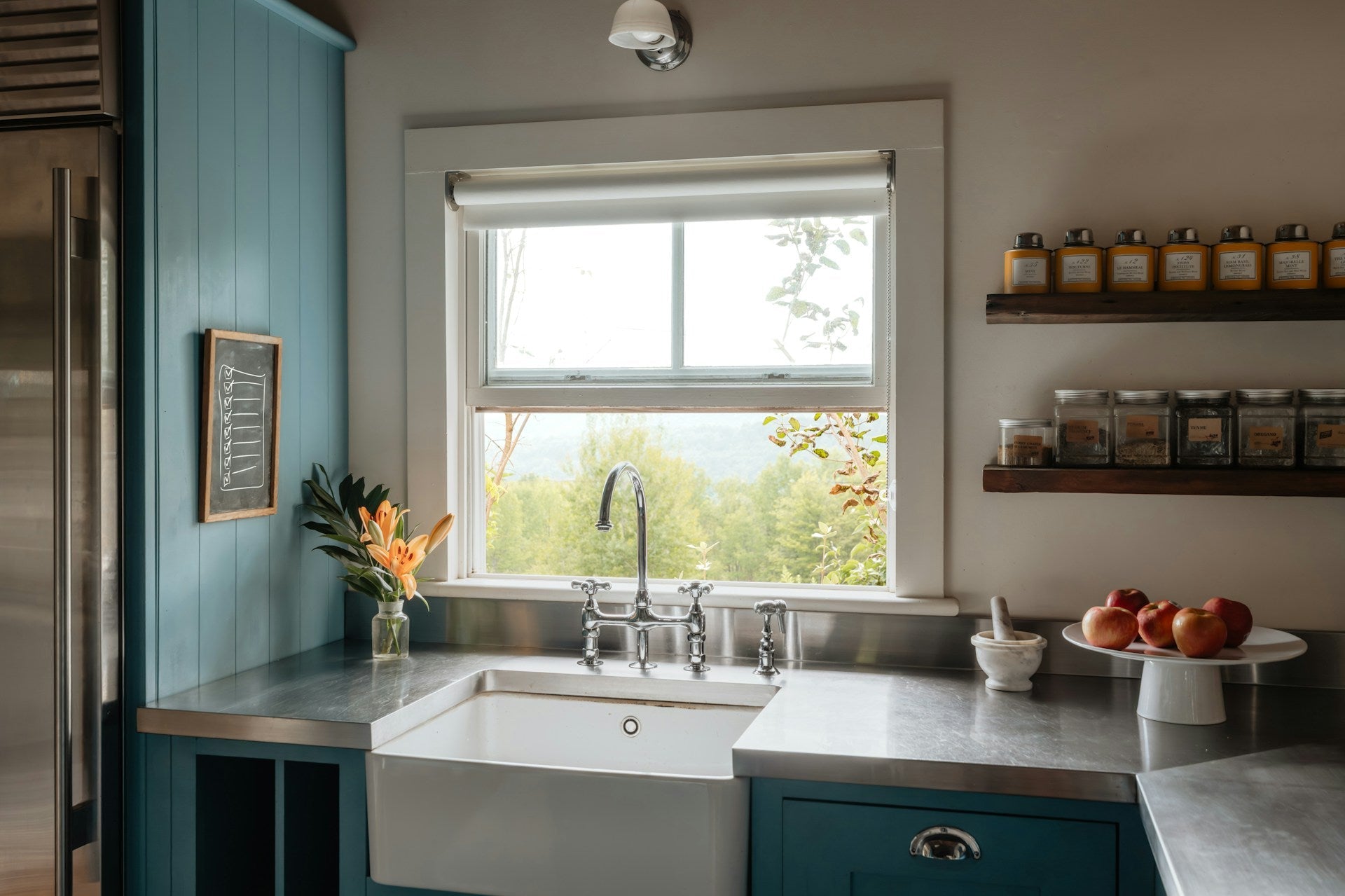
Why Real Wood Floating Shelves Belong in the Kitchen
Real wood floating kitchen shelves are showing up in more and more remodel plans, and there is a good reason. When upper cabinets come down and solid wood goes up, a kitchen instantly feels brighter, more open, and more personal. You see your favorite dishes, not a wall of doors. You see grain and light, not shadows.
If you are planning a remodel before summer guests show up, you might be stuck between sticking with full upper cabinets or opening things up with shelving. In a kitchen, looks alone are not enough. A shelf has to carry real weight, stand up to steam and splashes, and still look calm and intentional. That is where the right wood, the right bracket system, and the right layout all have to work together.
How Real Wood Changes the Look and Feel
Real hardwood has a quiet warmth that paint, laminate, and metal cannot match. In a room full of tile, stone, and stainless, wood settles the space. It softens the lines and helps your kitchen flow into the next room instead of feeling like a hard box.
Real wood floating kitchen shelves fit many styles, because the same material can read very different depending on how we shape and finish it. For example:
- Slim White Oak shelves with straight edges can feel very modern and minimal
- Slightly thicker Walnut with softened corners leans warm and classic
- Clean, light Maple fits a Japandi or Scandinavian mood
- Strongly figured Cherry pairs well with older brownstone-style trim
The design details matter more than most people think. When we build shelves, we are always looking at:
- Thickness and proportion, so the shelf looks solid, not flimsy or bulky
- Edge profile, from crisp square edges to subtle rounds that are easy on the hand
- End grain orientation, which is where you really see if it is real wood
- Grain figure, such as rift cut for straighter, calmer lines or plain sawn for more movement
Those small choices are what make a shelf feel like custom furniture instead of a random board on the wall.
Real Wood vs. Imitations and Everyday Use
There are a lot of products sold as floating shelves that are not solid hardwood. Veneer and laminate over a core can look fine from a distance, but up close the story changes. With solid hardwood, the thickness is real, the end grain is real, and if life leaves a mark, you have something you can sand and refresh instead of replace.
MDF and particle board tend to struggle in a kitchen. Steam from a dishwasher, humidity from boiling pots, and splashes near a sink all find the weak points. Edges can swell, corners can chip, and you do not have the option to refinish away the damage. Hollow box shelves and big-box kits also react differently under load. They may feel fine on day one, then slowly sag under stacks of plates and heavy mugs.
Think about what actually lives on kitchen shelves:
- Everyday plates and bowls
- Rows of glasses and mugs
- Cookbooks and canisters
- Maybe a mixer or a big stack of serving platters
That is not just decor, that is real weight. A solid hardwood shelf, properly supported, behaves like a small piece of structural furniture. It can handle depth and span without bowing. A well-built shelf also plans for wood movement. Good joinery and the right bracket system allow wood to expand and shrink a bit with seasons, without twisting or cupping.
Inside the Hovr Bracket System and Planning Your Layout
Strength and safety all come down to what is hidden in the wall and buried in the shelf. That is why we pair our solid hardwood floating shelves with the Hovr Bracket System, both Classic and Slim. It is a male and female interlocking system made from 6063 T6 aircraft-grade aluminum. The male bracket mounts across multiple studs in the wall, and the female bracket is set into the shelf itself, then the two lock together with a set screw.
Because the brackets run almost the full length of the shelf, you get a rigid connection that cannot tilt or slowly droop like standard 2-prong rod brackets. The Hovr Bracket System creates a true no-sag connection between the shelf and the wall. The Classic bracket at an 8-inch depth averages around 300 pounds of load capacity, which is industry-leading strength and tested to be about 13× stronger than standard brackets. For a busy kitchen with kids, guests, and heavy dinnerware, that level of strength is not a luxury, it is a safety feature.
The design also lets us hit studs wherever they happen to be along the wall, instead of hoping they line up with your dream shelf location. Because the male bracket spans multiple studs, we can secure into solid structure and still place the shelf exactly where the layout calls for it.
Once the structure is settled, layout makes or breaks the look. A few guiding ideas help:
- Thicker shelves, around 1.75 to 2 inches, feel right in a larger kitchen or high-ceiling room
- Slightly thinner shelves can look better in a smaller kitchen or tight nook
- Leave enough vertical space for the tallest items you actually use, not just what looks nice in a photo
- Over a coffee station, think about clearance over a grinder or espresso machine
- Near a range, keep a comfortable gap above the hood and away from direct heat
Mixing some closed uppers with floating shelves often works best. For example, you might keep solid cabinets for food storage, then use real wood shelves around a range hood, over a coffee bar, or across a bright window wall. Aligning shelf bottoms with cabinet lines and hood trims helps everything feel intentional instead of random.
Installation, Species Choice, and Care
Behind every clean, floating shelf is some very unglamorous wall work. We always want to know what is under the surface. Is it drywall, tile, or old plaster? Can we reach studs or blocking? Planning for the Hovr Bracket System early in a remodel makes life easier, especially if tile is going up. In our New York projects, we often deal with older walls that are not perfectly flat, so careful prep is key.
The Classic bracket works well where we have enough shelf thickness and want maximum capacity. The Slim bracket is helpful when we need a lower profile but still want that same male/female interlocking, no-sag performance and rigid connection. Either way, a proper install calls for solid stud attachment, level layout, and tools in experienced hands. A detail-focused contractor or advanced DIYer can handle it, but rushing the process leads to crooked lines and movement you do not want.
For wood species, we tend to lean on a few favorites in kitchens:
- White Oak, a strong, calm grain that plays nicely with both cool and warm finishes and can take color without turning muddy
- Walnut, rich and dark, great for contrast against light cabinets or stone
- Cherry, warm and classic, slowly deepening in color with age
- Maple, light and clean, very good for bright, minimal spaces
Natural finishes and oiling let the grain stay front and center while protecting from splashes. Wipe spills instead of letting them sit, especially near sinks or dishwashers. For daily cleaning, a soft cloth and a gentle cleaner are enough. A couple of times a year, it helps to look over your shelves, check that everything feels solid, and touch up the finish where things get the most use. With that little bit of care, solid hardwood shelves can keep their edges crisp and their surfaces beautiful for many summers of cooking and hosting.
Real wood floating kitchen shelves are not the right answer for everyone, but they are a strong choice if you want open, visible storage that still feels sturdy and refined. Thinking about your storage needs, how you cook, and how comfortable you are with items on display will help you decide where shelves shine and where closed cabinets still serve you best.
Transform Your Kitchen With Custom, Lasting Shelving
Upgrade your space with our handcrafted real wood floating kitchen shelves designed to look beautiful and stand up to daily use. At The Mortise & The Hare, we carefully select and finish each piece of hardwood so your shelves feel as solid and timeless as they look. If you have questions about sizing, finishes, or installation, contact us and we will help you plan the right solution for your kitchen.
Share:
Designing Load-Bearing Floating Shelves for Minimalist Kitchens
Load-Bearing Floating Shelves: Room-by-Room Uses and Safe Storage