



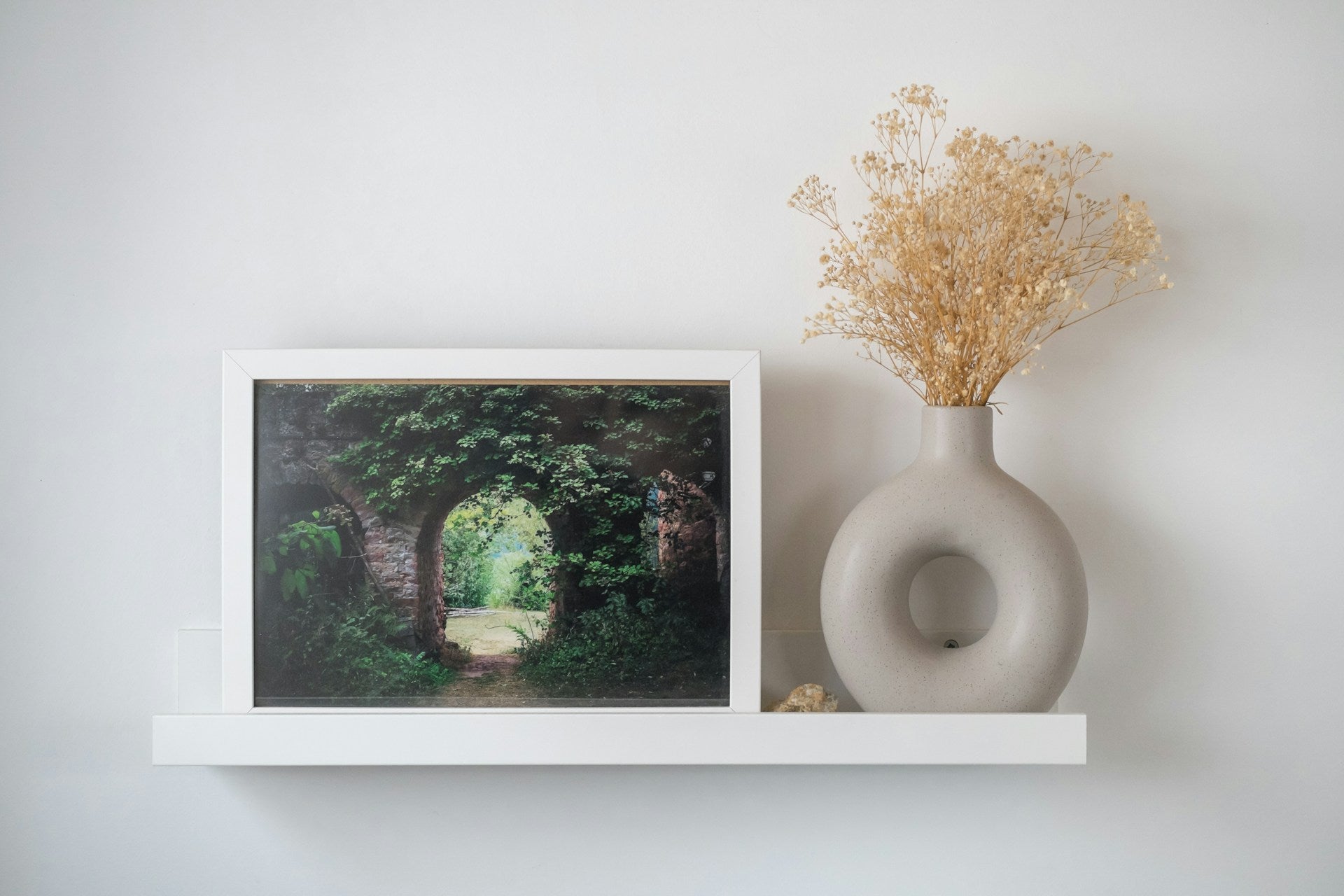
Short Shelves That Solve Tricky Wall Moments
Short floating wall shelves can turn the most awkward slivers of wall into some of the smartest spots in your home. Those narrow areas around light switches, thermostats, and tight door returns often collect clutter or just sit empty. With the right shelf, they can become clean landings for keys, candles, art, or a favorite small object.
In tight wall zones, the details matter a lot. Shelf depth, height, thickness, and hardware choice affect not only how the shelf looks, but also how it feels to move around it every day. Done well, short floating wall shelves feel like part of the architecture, not an afterthought or a quick hack screwed into drywall.
Our goal as makers is simple: give you a solid hardwood shelf that looks quiet and intentional, holds up to real life, and mounts safely so you never worry about sagging or tilting when someone brushes by.
Reading the Wall: Clearances, Codes, and Sightlines
Before thinking about wood species or finish, we like to “read” the wall. That starts with where the electrical devices already sit. Most light switches and thermostats fall somewhere around comfortable hand height. When you add short floating wall shelves nearby, you want to protect easy finger access in both directions.
A few simple clearance ideas help:
- Keep enough space beside the switch plate for your fingers, not just your knuckles
- Leave some breathing room above and below a thermostat so air can still move around it
- Watch the distance from door trim so the shelf does not feel jammed into the casing
Sightlines matter just as much as clearances. Think about what you see first when you walk into the room or down a hallway. A short shelf that lines up with:
- The top of a door frame
- A nearby window mullion
- The bottom of upper cabinets
will always feel calmer than one that floats at a random height. We often match shelf thickness to nearby elements too, so the eye reads one quiet language across the space.
Choosing Short Floating Wall Shelves That Age Gracefully
In small spans, every detail shows. That is why we reach for solid American hardwoods like White Oak, Walnut, and Maple instead of veneers or MDF. These tight, busy areas take bumps from bags, keys, elbows, and the occasional runaway toy. Solid hardwood can be refinished, oiled again, and lived with for years. Thin veneers and MDF tend to swell or chip when life gets rough.
On a 12- to 30-inch shelf, end grain and figure are right in front of you. How the wood looks at the cut ends affects the whole mood:
- Walnut brings a warm, Mid-Century feel, especially with slightly thicker profiles
- White Oak works beautifully for Japandi and Scandi, with its calm grain and option for light natural or subtle toned finishes
- Maple loves minimalist rooms, reading bright and clean with a fine, quiet pattern
Short spans also highlight color consistency. In a long run, your eye blends variations together. On a single small shelf, a wild board can feel loud. We choose boards with grain and tone that fit the style, whether that is a bold Mid-Century Modern statement or a soft, pale Japandi moment.
Finish matters just as much as species. We prefer hard-wax oils that soak into the wood and keep a natural feel under hand. In narrow passes, your shoulder or palm will touch the edge now and then. Hard-wax oil feels warm and honest, not plastic. It also moves better with seasonal shifts in humidity, which we know well here in New York as late winter gives way to damp early spring.
Proportion and Placement in Tight Wall Zones
Short floating wall shelves look best when they are sized with purpose. On a narrow wall, a deep shelf can feel pushy, and a thick shelf can feel heavy. A few rules of thumb help guide decisions:
- Depth: Often similar to or slightly shy of door casing depth works well in tight halls
- Thickness: Thicker for short spans that want a bolder, Mid-Century Modern presence, slimmer for Scandi or minimalist looks
- Width: Extending just past a thermostat or switch plate usually looks better than stopping exactly flush
By style, we approach proportions a little differently:
- Mid-Century Modern: Slightly thicker shelves in Walnut, aligned with door heads or case openings, feel confident and period-correct
- Japandi: Longer visual lines, pale woods like White Oak, and very limited objects on the shelf keep the room calm
- Scandi: Slimmer profiles, lighter tones, and repeating shelves in pairs or triplets add rhythm without clutter
- Minimalist: One perfectly placed shelf with near-invisible hardware, exact alignment to a known datum line, and no extra decoration
We like to treat these small shelves as architectural details, not just décor. That might mean matching the shelf thickness to a nearby cabinet face, echoing the height of a stair rail, or mirroring the depth of a window sill. When numbers repeat, the space feels settled.
Safe Mounting in Narrow Zones With Hovr Brackets
Narrow walls are less forgiving than big ones. You often have only part of a stud, a crowded switch box, and constant traffic brushing right past the shelf edge. If the hardware is weak, a short floating wall shelf can sag, tilt, or even pull out when someone leans or grabs it.
That is why we pair our solid hardwood shelves with the Hovr Bracket System, both Classic and Slim, which uses a Male/Female Interlocking System. The bracket locks the shelf and wall together in a rigid, no-sag connection. On a short span, that is key. The shelf must not tilt if a child grabs it, a guest steadies themselves, or you drop a heavy stack of books on the edge.
Good mounting in these narrow zones includes:
- Finding and using studs anywhere along the wall, even when they do not land in the center of the shelf
- Planning bracket placement so it clears electrical boxes and still carries real weight
- Skipping flimsy “mystery” wall anchors and choosing a structural-grade connection instead
The result is a shelf that feels like part of the framing, not a loose accessory.
Room-by-Room Ideas for Short Floating Wall Shelves
Once you start seeing these narrow gaps as little design moments, ideas come quickly.
In kitchens, short floating wall shelves work well:
- On a door return as a landing spot for keys, mail, and a notepad
- Flanking a bank of switches with spices or a small coffee ritual setup
- Bridging between a window casing and the last upper cabinet for cookbooks
In living rooms and entries, a slim solid hardwood shelf under a thermostat or beside a door can hold a small lamp, phone, or framed print. Here, depth is key so shoulders do not hit the corner. Often a shallower shelf with a strong bracket is better than a deep one that feels like it is reaching into the room.
Bathrooms and powder rooms are full of tight walls. Short floating wall shelves above switches or beside mirrors can hold rolled towels, fragrance, or a small plant. In these wetter spaces, we pay extra attention to finish and wood choice so the shelf handles steamy mornings and the up and down humidity that comes with changing seasons in the Northeast.
When you repeat the same wood species and finish used on mantels, vanities, or built-ins, those short shelves stop feeling random. They start to read like quiet, crafted parts of the room, which is what we care about most at The Mortise & The Hare.
Transform Your Walls With Thoughtfully Crafted Shelving
Give your space a clean, purposeful look with our handcrafted short floating wall shelves designed to fit perfectly into tight or awkward areas. At The Mortise & The Hare, we carefully select hardwoods and finishes so your shelves feel as solid and beautiful as your favorite furniture pieces. If you have questions about sizing, installation, or custom options, you can contact us and we will help you plan the right solution for your home.
Share:
Best Spots to Try a Floating Shelf in Oak Right Now
Best Spots to Try a Floating Shelf in Oak Right Now