


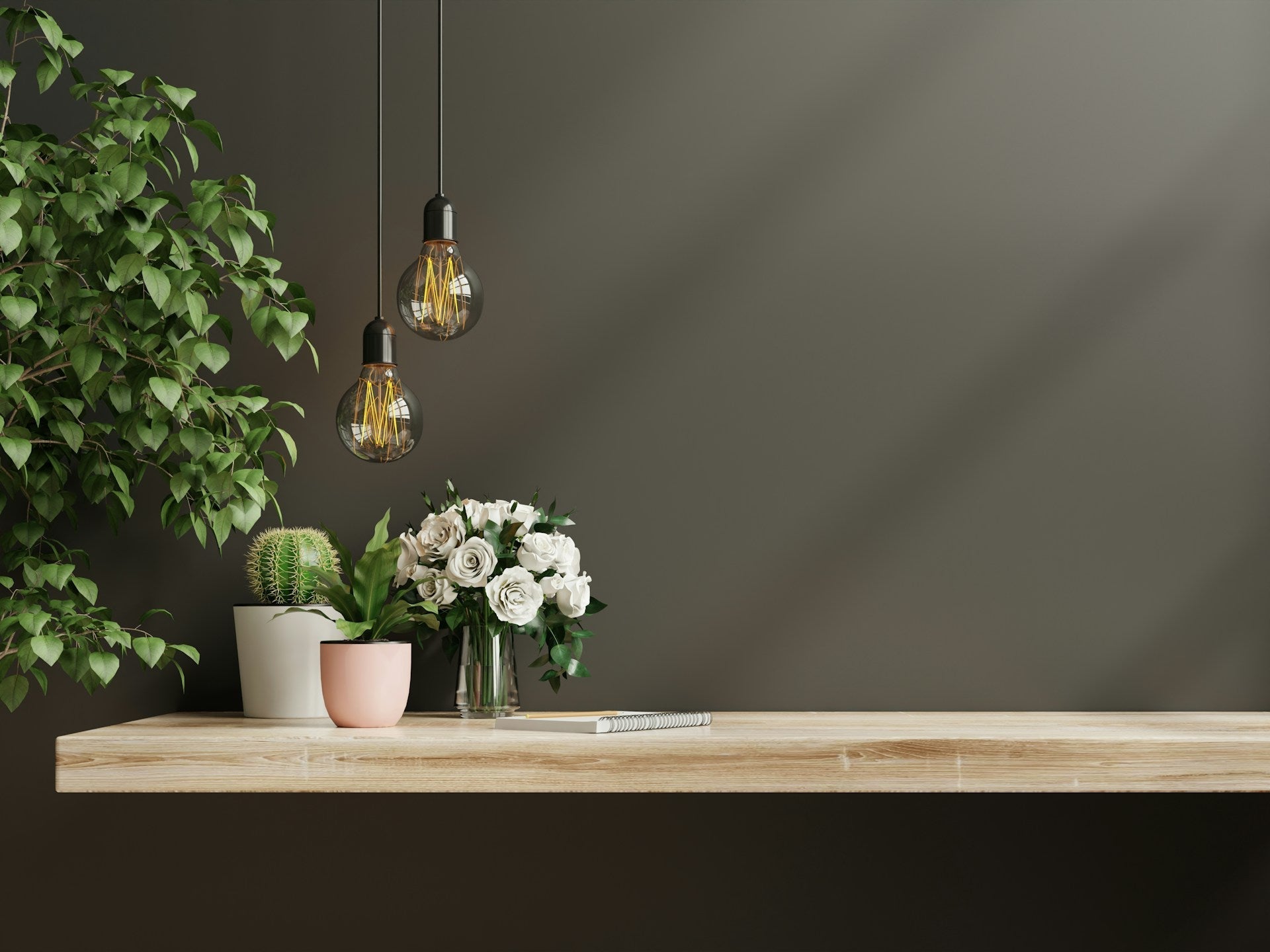
The Structural Truth Behind Weight-Bearing Floating Shelves
Floating shelves for a modern home are not just about clean lines and pretty styling. If you want to store real, heavy things like stacks of plates, pottery, or art books, you are suddenly talking about structure, not just decor. This is where the gap opens between light-duty “accent” shelves and true weight-bearing floating shelves that feel as permanent as a built-in.
At The Mortise & The Hare, we build solid hardwood floating shelves that are meant to work hard and look effortless. In this article, we will answer the question, “Can floating shelves hold heavy items?” by walking through the physics inside the wall, the difference between solid wood and MDF, how our Hovr Bracket System works, and how all of that translates into calm confidence every time you set something down.
When Shelves Must Never Fail
Picture a modern kitchen or living room where the walls are not covered in upper cabinets, but in long runs of warm hardwood floating shelves. On them sit heirloom pottery, oversized cookbooks, framed art, even a lineup of cast-iron pans. Everything is out in the open, part of the design. It is beautiful, but it also raises a very real question: what keeps all of this from crashing down?
Many homeowners and designers feel a nagging anxiety at this point. Questions pop up, like:
- Can floating shelves hold heavy items, really?
- Will they sag in a year?
- What if they rip out of the drywall during a family gathering?
That anxiety is valid. Most big-box floating shelves are not designed for that kind of work. When we talk about true weight-bearing floating shelves, we are really talking about structural physics hidden inside beautiful solid hardwood. Our approach combines:
- Solid hardwood, not MDF or hollow cores
- Hidden, engineered no-sag Hovr brackets
- Shelves rated up to 300 lbs, built for everyday, real-world loading
The goal is simple: floating shelves for a modern home that look visually light but behave like permanent architecture.
What Actually Holds the Weight
Every shelf, whether you see brackets or not, follows the same rule: weight has to move from the items on the shelf, into the shelf itself, into the bracket, and finally into the wall studs. That path, called the load path, matters more than any promise printed on a box.
With traditional two-prong rod brackets:
- A couple of steel rods stick into the back of the shelf
- Load is carried at just a few points
- Any looseness becomes wobble and long-term sag
With the Hovr Bracket System we use, the shelf engages a continuous length of 6063 T6 aircraft-grade aluminum:
- A male/female interlocking profile runs nearly the full length of the shelf
- A set screw locks the two pieces together, creating a rigid, no-sag plane
- Load is distributed evenly along the bracket, then into multiple studs
This is a different category of hardware. The Classic Hovr at an 8-inch shelf depth offers industry-leading strength, with an average load capacity of 300 lbs, and is 13× stronger than standard brackets. That strength is a safety feature, not a brag. It is what makes it reasonable to store:
- Heavy dinnerware and stoneware
- Large art and photography books
- Cast-iron and other dense cookware
- Daily use items in busy households
Because the Hovr track spans along the wall, you can fasten into any stud you find, then place the shelf where the design requires. You are not forced to align shelf positions with awkward stud locations, which is a huge advantage in kitchen and living room layouts.
Solid Hardwood vs. MDF: Why the Core Material Matters
Hardware is only half of the story. The material of the shelf itself has to cooperate with the bracket and carry load without creeping or sagging over time.
Solid hardwood:
- Has continuous wood fibers, higher density, and excellent screw-holding power
- Works with long-term bending loads without crumbling or delaminating
- Responds predictably when we orient grain direction and pay attention to end grain and figure
MDF or veneer-wrapped cores:
- Are essentially compressed fibers with resin
- Hold screws less reliably, especially under repeated loading and unloading
- Can swell or weaken with moisture, and thin veneers can hide small cracks until failure
When we build shelves, we pair solid hardwood with the Hovr bracket so the wood and metal act together as a single, stable unit. Under heavy, concentrated loads like stacks of plates or grouped books, this combination resists the slow, creeping sag that many people accept as “normal” for floating shelves.
We also think about finish as part of structural longevity. We prefer premium hardwax oils because they:
- Penetrate and protect the fibers rather than sitting as a brittle plastic film
- Are easier to maintain over the life of the shelf
- Keep the natural feel and look of the wood
When we talk about staining, it is typically in relation to White Oak only, where subtle shifts in tone can be used without burying the grain under a heavy, opaque color.
Exact Strength Ratings and What They Mean at Home
So, can floating shelves hold heavy items? Yes, if they are engineered as a structural element, not a decorative prop.
Our shelves, paired exclusively with hidden Hovr Bracket Systems (Classic or Slim), are rated as follows:
- 1.75 inch thick solid hardwood shelves are rated for 300 lbs when correctly installed into studs
- 1.5 inch thick solid hardwood shelves are rated for 150 lbs when correctly installed into studs
Both versions rely on the same 6063 T6 aircraft-grade aluminum Hovr profile with a male/female interlock and set screw that locks the shelf into a single, no-sag plane. The difference is in how much material the wood itself provides to resist bending.
To translate those numbers into daily life, think in terms of:
- Full runs of cookbook collections
- Dinnerware for a family of six or more
- Multiple pieces of Le Creuset or other heavy cookware
- Serious vinyl record stacks or photography books
The experience we aim for is boring in the best way: you load the shelf, you forget about it, and it looks the same next month, next season, and beyond.
Designing Floating Shelves for a Modern Home That Feel Permanent
Once you trust the structure, design becomes the fun part. Floating shelves for a modern home give you long, uninterrupted lines and generous negative space. The goal is to let the wood figure and your objects do the talking while the bracket disappears into the wall.
A few style directions where weight-bearing floating shelves shine:
- Mid-Century Modern, where long, low runs of walnut or oak echo classic casework
- Japandi and Scandi, where warm wood softens minimal, bright spaces
- Minimalist kitchens and living rooms, where upper cabinets give way to open, breathable walls
Proportion plays a big role:
- 1.75 inch thick shelves read a bit more architectural and support the higher 300 lb rating
- 1.5 inch thick shelves feel lighter visually, with a still-serious 150 lb rating
- Shelf length should feel intentional relative to the wall, not like a small plank stuck in a big void
Wood species and finish also matter. Many clients gravitate toward White Oak or Walnut in kitchens and baths, paired with natural oiling or hardwax finishes that stand up to humidity while aging gracefully instead of peeling or chipping.
Installation Confidence and Everyday Trust
Even the best shelf and bracket system need a correct install, but it does not have to feel like a contractor-only mystery. A few essentials matter most:
- Find wall studs accurately, and use appropriate fasteners into those studs
- Level and secure the Hovr bracket before you ever bring the shelf into the room
- Confirm the bracket is firmly fixed, then slide the shelf on and set the locking screw
Because the Hovr system is a continuous aluminum track, load spreads across multiple screws and studs. That means you are not relying on a couple of tiny points that can crush drywall or work loose over time. For designers and serious DIYers, a bit of planning makes this even smoother:
- Use painter’s tape or cardboard mockups to visualize exact shelf locations
- Consider clearances for backsplashes, outlets, windows, and range hoods
- Map stud locations before finalizing shelf spacing
When all of this comes together, the feeling changes dramatically. Instead of treating your floating shelves like fragile art ledges, you start using them like part of the wall structure, with no wobble and no guilty pause before you add one more heavy piece.
From Worry to Long-Term Confidence
The emotional arc is simple: you start by asking if weight-bearing floating shelves are safe for real, heavy objects, and you end with the quiet certainty that they are. That certainty comes from understanding what is inside the wall and inside the wood.
At The Mortise & The Hare, we combine:
- Solid hardwood construction chosen and oriented for strength
- 6063 T6 aircraft-grade aluminum Hovr Bracket Systems with a male/female interlock and set screw
- Clear load ratings, 300 lbs for 1.75 inch shelves and 150 lbs for 1.5 inch shelves, when installed correctly into studs
- Natural, hardwearing finishes that support long-term use
When you choose floating shelves for a modern home with the seriousness of a structural beam, you get to enjoy a calm, minimal look that hides all the engineering. The pottery, the books, the cast iron, and the memories can all live on the wall, not locked away in a cabinet, and you can stop wondering if the shelves will hold and start trusting that they simply will.
Transform Your Walls With Functional, Modern Design
Elevate your space with our handcrafted Floating shelves for a modern home, thoughtfully designed to balance clean lines with everyday practicality. At The Mortise & The Hare, we help you choose sizes, finishes, and layouts that fit your rooms and your lifestyle. If you have questions or need a custom recommendation, simply contact us and we will guide you through the next steps.
Share:
Ranking the Strongest Hardwoods for Luxury Floating Shelves
Beyond the Drywall: Why Studs Decide If Shelves Succeed