


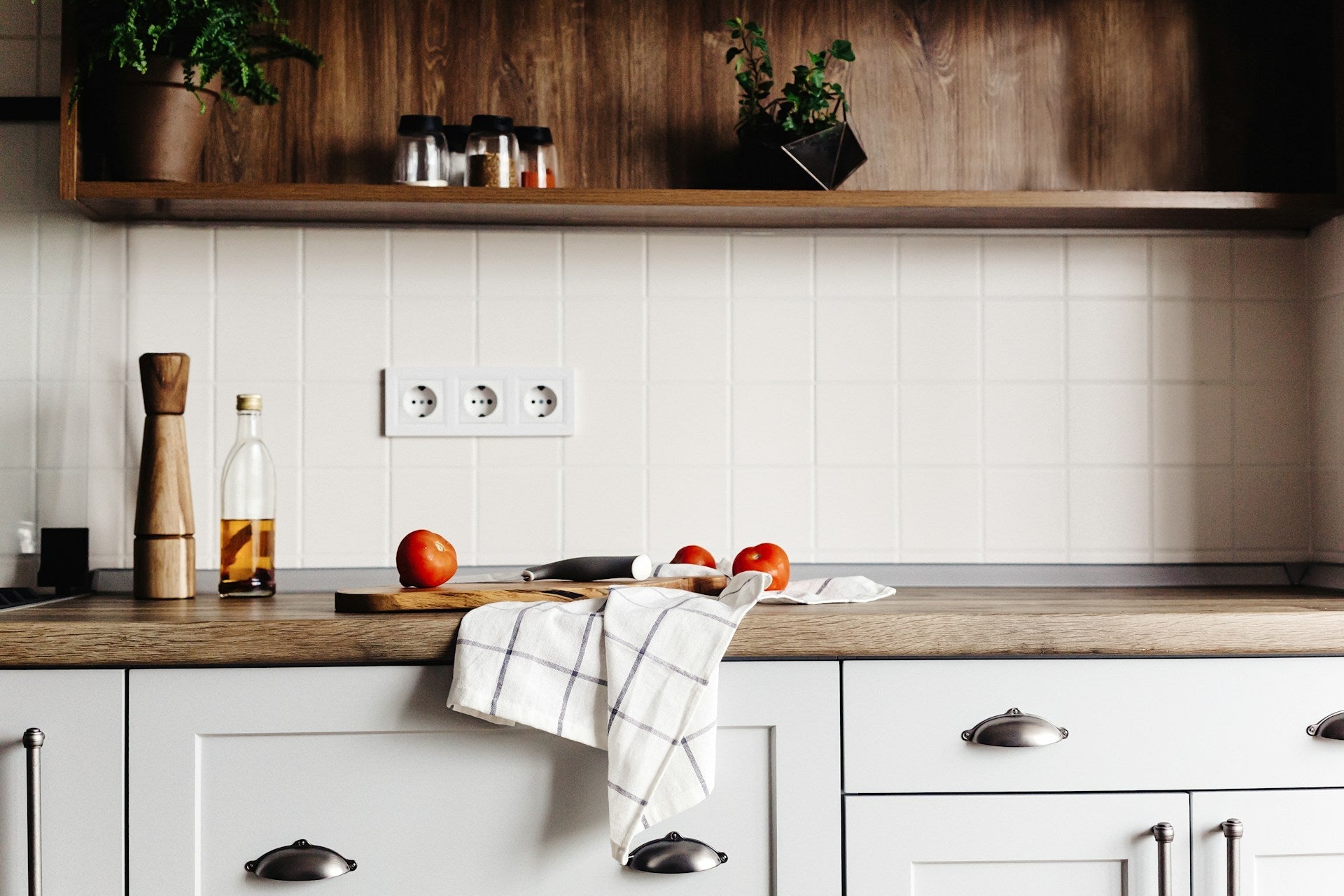
Late summer is when many kitchens get torn apart and put back together. There is just enough time before holiday cooking and guests show up, so the pressure is on to make every inch count. Wall shelves are a big part of that, especially in open kitchens where everything is out in the open. A custom-depth wall shelf is not just a pretty plank; it is a working tool that can make cooking and serving feel smooth or stressful.
Shelf depth is what makes or breaks that experience. Too shallow, and you cannot fit a dinner plate. Too deep, and the shelf feels heavy, blocks views, and collects clutter you never touch. When we build solid hardwood floating shelves, we always plan around three things: how you cook, what you see from nearby rooms, and what the walls and appliances will actually allow. With the right depth, industry-leading no-sag hardware, and a clean, natural finish, you get a minimalist look that still works hard every day.
Plan Around Workflow Zones First
Professional kitchen designers start with zones, then choose storage. Homeowners can think the same way. Before scrolling photos, think about where you chop, where you cook, and where you clean and serve. Your custom-depth wall shelf should support those movements, not fight them.
We like to break the kitchen into three main zones:
- Prep zone: where you chop and mix, usually near your biggest stretch of counter
- Cook zone: around the range and hood, where heat, steam, and splatter live
- Serve and clean zone: around the sink and dishwasher, where dishes move in and out
For the prep zone, an 8- to 10-inch deep shelf usually feels best. That depth holds oils, small bowls, and spices, while still keeping items close enough that you do not twist your shoulder to reach the back. Near the cook zone, we usually stay between 8 and 11 inches around the hood so the shelves do not crowd the hood line or feel bulky above a hot surface. In the serve and clean zone, 10- to 12-inch shelves can work well for glassware and stacked plates as long as you are not pushing into a tight walkway.
The most useful step is simple: grab a tape measure and measure real items. Check:
- Your widest everyday dinner plates
- Your tallest wine or water glasses
- Mixing bowls and small prep boards
Then add about 1 to 1.5 inches of breathing room so you are not sliding things on and off at an angle. Planning with real objects beats guessing from a styled photo every time.
Keep Sightlines Clean with the Right Depth
Sightlines are what you see when you glance across the room. In open homes, that might mean:
- The view from the front entry toward the kitchen
- The line of sight from the island or a nearby sofa
- How shelves meet the bottom of your upper cabinets and the hood
Depth changes how heavy a shelf looks. An 8- to 9-inch solid hardwood shelf often feels light and architectural, which fits really well with Japandi and Scandi-inspired kitchens. Once you push past 11 or 12 inches in a smaller room, a shelf can start to read like a short, chunky cabinet. That works in some styles, but it can fight a minimalist or airy look.
A few simple tricks help keep that clean profile:
- Align the underside of your shelves with the bottom of nearby cabinets or the hood trim so your eye sees one quiet line
- Pick a shelf thickness in the 1.5 to 1.75 inch range, with strength coming from inside hardware, not from making a blocky slab
- Choose wood that matches your style, like White Oak with a light natural oil for a calm, modern feel or Walnut for a warmer mid-century mood
- Use simple square or softly eased edges so the line stays crisp
A custom-depth wall shelf lets you thread that needle, deep enough to be useful and shallow enough to sit quietly in the room.
Respect Clearance Rules so Shelves Feel Intentional
Good planning also means listening to what the room allows. Clearance rules are not just about codes; they are about comfort and safety. Before you order anything, pay attention to:
- Backsplash outlets and switches so cords and plugs do not get trapped under a shelf
- Range hood guidelines, including the vertical distance from burners to nearby wood surfaces
- Cabinet and appliance door swings so shelves do not clip a corner of a door or feel squeezed between boxes
We like painter’s tape for this stage. Mark:
- Stud locations along the wall
- The width and height of the hood
- The arcs of every door and drawer when fully open
Then step back and measure from those tape marks. Allow at least 1 to 2 inches of extra room so doors do not skim the underside of a shelf. Around islands and main walk paths, remember to leave clear space after you add shelf depth, aiming for wide, comfortable aisles instead of tight pinches.
Think about height for different people too. A tall person walking quickly near a shelf should not brush it with their shoulder or forehead. In a busy kitchen, that comfort adds up.
Build for Real Life, Not Just for Photos
Once the layout works, the materials and hardware decide how long your shelves will last. We build in solid hardwood, like White Oak and Walnut, because real wood holds fasteners well and resists sagging under heavy dinnerware, stoneware, and stacks of cookbooks. Solid hardwood also brings natural figure and grain that simply outclasses thin veneers and MDF. Veneers and MDF may look nice on day one, but they do not love moisture near sinks or dishwashers and screw holes can wear out over time. They are the core of most fast furniture; we build for decades, not seasons.
Finish matters too. We prefer premium hardwax oils such as Rubio Monocoat and Osmo that sink into the grain and leave a natural, low sheen surface that suits modern kitchens. Light scratches and marks from daily use can usually be spot repaired without stripping the whole shelf, which is a big help in a busy home. Thick, cheap polyurethane or plastic-like coatings can chip at the edges and are much harder to fix without a full refinish.
Rely on the Hovr Bracket System for No-Sag Strength
Inside the shelf, the Hovr Bracket System carries the load. It is made from 6063-T6 aircraft-grade aluminum and uses a male/female interlocking system. The male bracket mounts to the wall and straddles multiple studs anywhere along the run, so you can secure into solid framing without being limited by awkward stud placement. The female bracket is embedded inside the shelf. When the two lock together with a set screw, you get a true No-Sag connection that is engineered to carry heavy, real-world loads.
The Hovr Classic system has an average load capacity of 300 pounds at an 8-inch shelf depth, about 13x stronger than standard two-prong rod brackets. The Hovr Slim system lets us build thinner, more minimalist profiles without giving up that industry-leading strength.
That strength is a safety feature as much as a design feature. It means the shelf can handle heavy dinnerware, massive book collections, Dutch ovens, and dense stacks of stoneware in busy households with kids and frequent guests, without creeping downward over time.
For installation, we plan the shelf lengths and depths after zones, sightlines, and clearances are set. Studs are marked, then the male Hovr bracket is fastened into those studs with structural screws. Because the male bracket can run across multiple studs, we can solve tricky stud-spacing issues and still land shelves exactly where you want them. The shelf, with the female bracket hidden inside, slides on and locks with the set screw. That hidden joinery and the No-Sag guarantee keep the shelf flat and solid year after year.
Carry the Same Logic Beyond the Kitchen
Once you learn to plan depth around function, sightlines, and clearances, you can use the same approach in open living spaces. In living rooms, 10- to 12-inch shelves feel right for art books and sculptural pieces. In dining areas, 9 to 11 inches can hold barware and platters for late summer and fall hosting. In bathrooms, 6 to 9 inches works for towels and jars without crowding a tight space.
We build all of these with the same solid hardwood, hardwax oils like Rubio Monocoat or Osmo, and hidden Hovr Bracket System (Classic or Slim, depending on the profile) so the look feels consistent as you move from the kitchen to nearby rooms. Whether your style leans Mid-Century Modern with Walnut, or Japandi and Scandi with lighter Oak and slim profiles, careful planning around depth, and serious, no-sag hardware behind the scenes, is what keeps the shelves feeling calm, intentional, and ready for daily use.
Get Started With Your Project Today
Transform your space with a perfectly fitted custom-depth wall shelf handcrafted to match your dimensions, style, and storage needs. At The Mortise & The Hare, we work closely with you to select the right hardwood, finish, and mounting approach so your shelving feels built-in, not bought off the rack. Share your measurements and ideas, and we will help refine them into a practical, beautiful solution. If you have questions or need guidance before getting started, simply contact us and we will walk you through the options.
Share:
Scandinavian Shelf Design: Grain, Proportions, and Finish for Hidden Brackets
Scandinavian Shelf Design: Grain, Proportions, and Finish for Hidden Brackets