


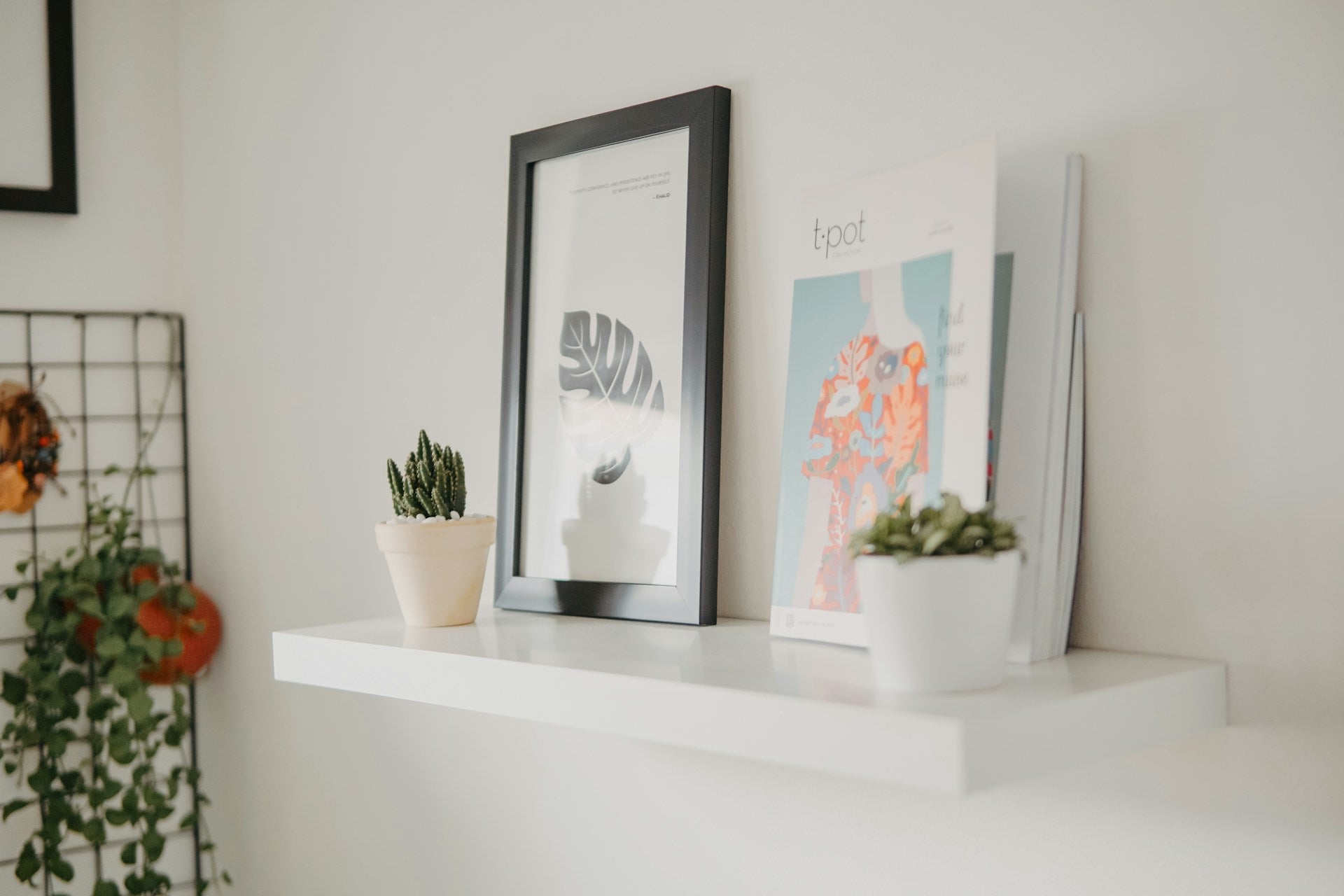
Build Calm, Modern Spaces with True Floating Shelves
Good shelves quietly change how a room feels. Clean lines, clear counters, and a place for the things you actually love can turn a busy kitchen or living room into a calm, modern space.
Late summer is a great time to lock in shelving. Remodels are wrapping up, kids are heading back to school, and the holidays are closer than they feel. If you plan your shelves in August, they can be milled, finished, installed, and styled before guests show up for fall dinners and long weekends.
When we talk about true floating shelves, we mean shelves with no visible brackets at all. Not chunky “L” brackets, not decorative pipes, just a solid wood shelf that appears to grow straight out of the wall. That clean line supports minimalist design, and it only works when the shelf and the hardware are built to act as one.
At The Mortise & The Hare, we build solid hardwood floating shelves in our American workshop and pair them with engineered Hovr aluminum brackets. In this guide, we will talk through how to choose your wood, match modern styles, and plan safe, strong shelves that stay level under real-world use.
Why Solid Hardwood Shelves Outperform Fast Furniture
A floating shelf does two jobs at once. It needs to look beautiful, and it needs to quietly hold a lot of weight without sagging or failing. That is where material choice really matters.
Solid American hardwood like Walnut, White Oak, Maple, and Red Oak behaves very differently from thin veneer over MDF or particle board. With real hardwood, the shelf is one continuous piece of wood, front to back and top to bottom. You see true grain, end grain, and natural figure, not a printed pattern wrapped over a soft, crumbly core.
Fast-furniture style shelves often use:
- Paper-thin veneer over MDF or particle board
- Hollow cores that feel light but dent easily
- Surfaces that chip if they take a bump
By contrast, solid hardwood gives you:
- Strength through the entire thickness of the board
- The ability to sand and refresh if life leaves marks
- Grain that gains character with age instead of peeling
Properly kiln-dried hardwood, arranged with the right grain orientation and sound joinery, stays flatter and more stable over time. It still moves a little with humidity, because all real wood does, but it does so in a predictable way. That stability matters when you are loading shelves with stacks of plates, cookbooks, records, or heavy decor.
Minimalist homes often follow a “less but better” mindset. A few solid pieces in real wood anchor the room and keep it from feeling flimsy. In busy kitchens, dining rooms, and living spaces, that quiet strength reads as calm.
Custom USA-Made Floating Shelves for Your Exact Space
When we say custom USA-made floating shelves, we mean shelves built to order for your wall, not pulled off a warehouse rack. We size each shelf to your exact length and depth, then build it from your chosen hardwood with a finish tuned to modern interiors.
Here is how we think about species choices:
- Walnut: Warm brown tones with strong, graphic grain that loves Mid-Century Modern lines and darker metals
- White Oak: A favorite for Japandi and Scandi spaces, especially with a clear oil that keeps the wood pale and natural
- Maple: Bright, clean, and light, ideal for minimal kitchens, kids’ spaces, and anywhere you want an airy, gallery-like feeling
- Red Oak: More traditional grain that still sits well in modern rooms, good when you want texture and warmth together
We often help clients tie shelves to what is already in the room. That might mean matching the tone of nearby cabinetry, echoing the color of flooring, or lining up shelf thickness with door and window trim so it feels built-in instead of “stuck on.”
A few simple planning ideas:
- Align shelf heights with the tops of doors, windows, or cabinet runs
- Keep reveals consistent, like repeating the same distance between shelves
- Match species and finish to at least one other major element, such as floors or island cabinetry.
Seasonally, August is a smart ordering window. It leaves time to finalize dimensions with your contractor or designer, get wood milled and finished, and handle install before fall entertaining begins.
Inside the Hovr Bracket System and No Sag Performance
The hardware you never see does most of the work. Our shelves are built around the Hovr Bracket System, in both Classic and Slim profiles. These brackets are made from 6063 T6 aircraft-grade aluminum and use a male and female interlocking design.
Here is how it works in simple terms:
- The male bracket mounts flat to the wall, and can straddle multiple studs
- The female bracket is embedded inside the shelf itself during the build
- The two pieces slide together and lock with a set screw, so the shelf and wall bracket act as one rigid unit
Traditional two-prong rod brackets can tilt, sag, or twist over time, especially under real weight. The Hovr Classic bracket at 8-inch depth is rated at an average 300 pounds and can be up to 13 times stronger than standard brackets. That strength is not just a brag point, it is a safety feature.
With this setup, shelves can safely hold:
- Heavy dinnerware and serveware in active kitchens
- Long runs of books and records in living rooms
- Art objects, planters, and storage bins in busy households
Because the Hovr bracket spans across the wall, you can fasten into studs wherever they fall, even if the visual center of the shelf does not land on a stud. That solves a constant frustration for builders and designers who care about alignment and safety at the same time.
Installing Floating Shelves Like a Pro Builder
A good install starts long before the shelf touches the wall. Even if you are working with a contractor, it helps to know the steps so you can plan the space.
The basic process goes like this:
- Layout: Mark shelf locations on the wall, checking heights against cabinets, windows, and outlets
- Stud finding: Locate and mark studs clearly across the run of the shelf
- Level lines: Strike a level line so all brackets sit perfectly straight, even if the floor or ceiling is a little off
For fastening the Hovr male bracket, we recommend:
- Using proper wood screws sized for the bracket holes and wall framing
- Hitting as many studs as possible along the length of the shelf
- Checking for plumbing or electrical in remodel walls before drilling
Once the wall bracket is locked in, the shelf side is already aligned since we embed the female bracket in the wood at the shop. The shelf slides onto the wall bracket, then the set screw pulls the two pieces tight. The result feels like a single solid beam, with no rattle and no play.
If walls are slightly wavy, a finish carpenter can shim behind the male bracket before tightening everything down. For tile or stone, it is best to plan so brackets tie into framing, not just surface material, which is another reason to think about shelving early in the project.
Capable DIYers who have hung upper cabinets or a TV wall mount can understand this system, but many homeowners prefer having a finish carpenter handle the tools so they can simply enjoy the final look.
Finishes and Styling for Modern Minimalist Homes
The last layer is finish and styling. We lean toward hardwax oils like Rubio Monocoat and Osmo instead of thick plastic-feeling polyurethanes. These oils sink into the wood fibers, bond with them, and leave the surface feeling like actual wood with a matte to soft satin sheen.
Hardwax oils are:
- Tactile, with a natural feel under your hand
- Repairable in place, with spot touch-ups instead of full stripping
- Resistant to everyday spills in real kitchens and living rooms
For style:
- Clear-oiled White Oak pairs beautifully with Japandi and Scandi calm, especially next to stone and linen textures
- Natural Walnut brings Mid-Century warmth, depth, and contrast against white walls or darker cabinets
- Light, clear Maple keeps rooms bright and open, great for minimal or gallery-inspired spaces
On White Oak, we sometimes use carefully controlled tones to nudge the color slightly warmer or cooler while still letting the grain show through. The goal is always the same: let the wood look like wood.
When it comes to styling:
- Kitchens: Mix open shelves with closed cabinets, keep heavier stacks closer to stud locations, and leave breathing room between groups of items
- Living rooms: Use full-width shelves in alcoves for books and art, repeat heights for rhythm, and consider small lighting elements on or below the shelves
- Bathrooms: Choose shallower depths for hand towels and essentials, pair wood with your stone or tile, and mount shelves at heights that feel natural to reach
Different styles call for different “visual rules.” Mid-Century Modern leans on records, sculptural pieces, and rhythmic repeats. Japandi stays quiet with a few natural objects and soft textiles. Scandi keeps to pale woods and light, with lots of negative space. Pure Minimalism asks you to edit hard and align every shelf line with the architecture around it.
Done thoughtfully, custom USA-made floating shelves in solid hardwood can tie all of this together, giving you storage, structure, and a calm backdrop for daily life.
Upgrade Your Space With Thoughtfully Crafted Storage
Transform your walls into functional, design-forward focal points with our custom USA-made floating shelves. At The Mortise & The Hare, we handcraft each piece to fit your measurements, style, and everyday needs so your shelves look built-in, not just added on. Share your ideas, dimensions, or inspiration photos and we will help you choose the right options for your home. If you have questions or a unique project in mind, contact us so we can get started together.
Share:
How to Measure and Order Custom Floating Shelves for Out-of-Square Walls