


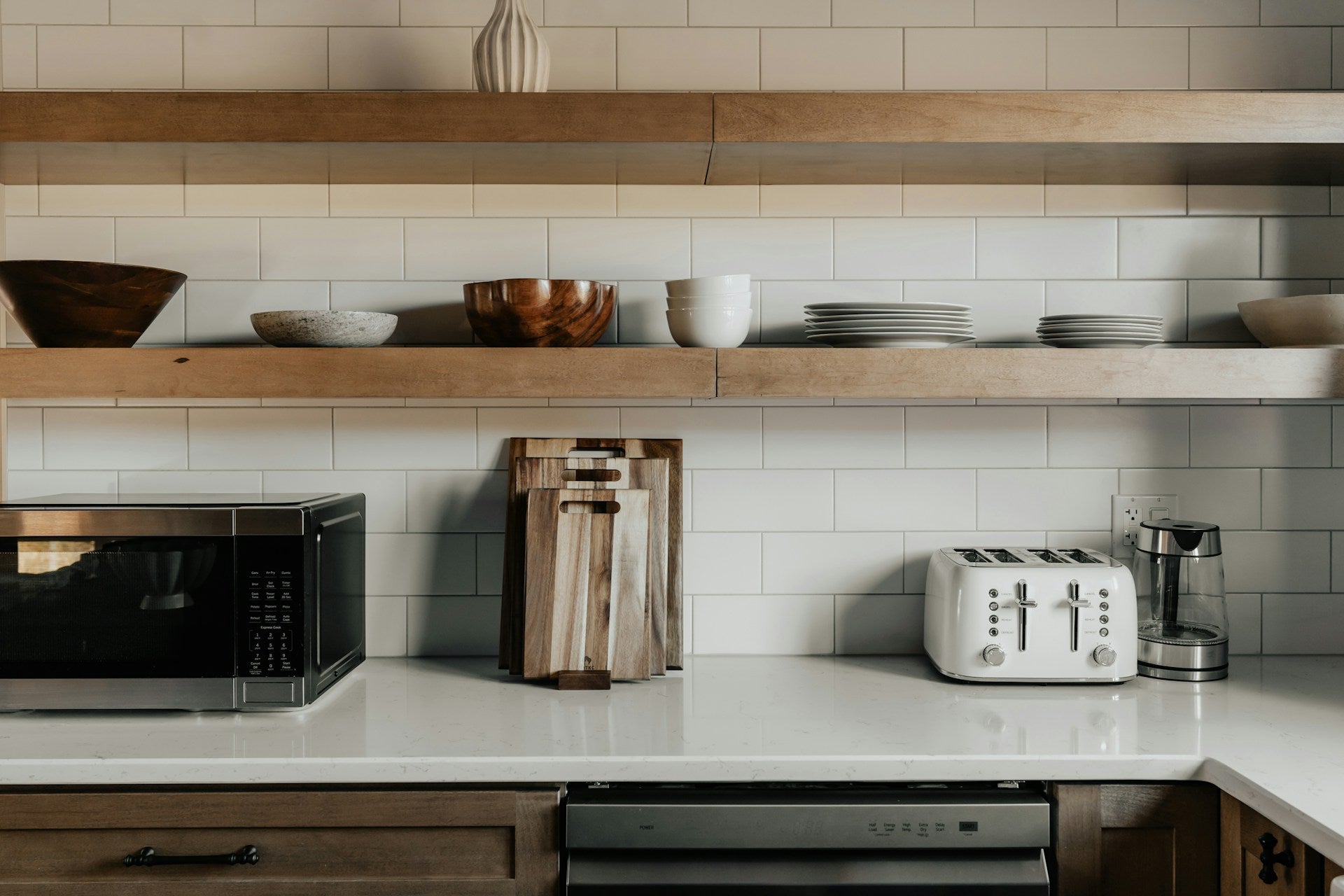
Custom Size Floating Shelves That Actually Fit Your Kitchen
Custom-size floating shelves solve a simple but annoying problem: your kitchen is not built around standard shelf sizes. Tile lines stop in odd spots, range hoods sit just off center, and walls never seem to match what comes in the box. When you try to force stock shelves into that kind of space, the result can feel a little off, even when everything is level.
We build shelves so you can design around your kitchen, not the other way around. Clean, modern lines only look clean if they land where your eye expects them to. In this article, we will walk through sizing, proportions, materials, finishes, and installation so your floating shelves look intentional, strong, and part of the architecture, not like an afterthought from the summer sale aisle.
Designing Shelves to Match Your Exact Layout
Good shelves start with good measuring. Before you think about wood species or finish, grab a tape measure, a pencil, and some painter’s tape.
Here is what to measure with intention:
- Distance between upper cabinets, windows, and range hoods
- Full wall runs, corner to corner, not just the area you think you will use
- Backsplash thickness and where grout lines land
- Locations of outlets, switches, and any undercabinet lighting
We like to see shelves line up with grout lines or key cabinet seams so everything feels calm to the eye. If you are tiling, plan the tile layout and shelf length together so cuts and joints do not fight each other.
Depth and proportion matter just as much. For real kitchens, not just photos, we usually think in terms like this:
- About 8 to 10 inches deep for glasses, coffee mugs, and small plates
- Closer to 10 to 12 inches for dinner plates, serving bowls, or stacks of cookbooks
- Enough clearance from the front edge to the nearest counter or island edge so traffic does not feel tight
Style plays into thickness and stacking. For different looks, consider:
- Mid-Century Modern: medium thickness, strong grain, pairs well with Walnut, maybe two or three shelves stacked evenly
- Japandi: slimmer profiles, softer edges, warm tone Walnut or lightly toned White Oak
- Scandi: lighter species like Maple or White Oak, clean edges, simple single runs
- Minimalist: fewer, longer shelves, often thicker stock so they read like strong lines on the wall
Corners and tricky walls are where custom sizing really earns its keep. Inside corners can be:
- A single “L” shaped run, built to your exact corner angle
- Two separate shelves that meet neatly in the corner with a tiny reveal line
- Staggered lengths on each wall to work around an off-center hood or window
With made-to-order dimensions, you are not cutting down stock parts on site and hoping they look right. The shelf is built for the opening you actually have.
Why Solid Hardwood Beats MDF in Busy Kitchens
We work in solid American hardwood because kitchens are hard on shelves. MDF and veneered cores might look fine on day one, but they do not handle real loads and moisture as gracefully.
Solid Walnut, White Oak, Maple, and Red Oak:
- Stay flatter and stronger under stacks of dinnerware
- Hold screws and hardware more securely
- Resist swelling and crumbling along edges in humid spaces
End grain, figure, and color all deepen with time. Instead of a printed wood look that chips, solid hardwood develops character. Near sinks and dishwashers, this matters. A solid board will outlast a thin veneer glued over a soft core.
Matching species to your kitchen style is part design, part architecture:
- Walnut brings warmth, perfect for Mid-Century Modern and Japandi spaces
- White Oak feels airy and grounded, great for Scandi and Minimalist palettes
- Maple is bright and clean, a nice partner for painted cabinets
- Red Oak gives a classic, timeless look with a bit more visible grain
When your floating shelves share a species with your floors, beams, or cabinet panels, the whole room feels pulled together. The shelves stop looking like decor and start reading as part of the build.
Long-term, solid hardwood wins on movement and strength. Wood will always respond a little to seasons, but:
- Thick, solid stock paired with good joinery resists warping
- A solid shelf does not feel hollow or flimsy when you set down a heavy pot
- Over time, it feels more like a piece of fine furniture than a styling prop
Hardwax-Oil Finishes That Work as Hard as Your Kitchen
We prefer hardwax oil finishes like Rubio Monocoat and Osmo because they protect the wood from inside the fibers instead of sealing it under a thick plastic skin. Many cheap poly finishes sit on top, and when they chip or peel, the repair can be a whole project.
With hardwax oil:
- The finish bonds at the molecular level inside the wood
- The surface keeps a natural feel instead of a plastic gloss
- The grain and figure of the hardwood stay clear and alive
Kitchens are tough rooms. Steam from summer canning, splashes around the sink, coffee rings that sit longer than they should, constant restyling for guests or holidays; it all adds up. Hardwax oils handle that everyday reality, and when life leaves a mark, you can spot repair instead of sanding the entire shelf back to bare wood.
Color and tone are where the finish really becomes a design tool:
- On Walnut, we can lean into the warmth or keep it a touch more neutral
- On Maple, we keep things light and clean so it does not go too yellow
- On White Oak, we can gently tone when you want color without muddying the grain
For Japandi, Scandi, and Minimalist kitchens, we usually recommend soft, low-sheen finishes so light glides over the shelf instead of bouncing harshly.
No Sag Installation with the Hovr Bracket System
Floating shelves only feel premium if they feel solid. Traditional two-prong rod brackets often flex over time. Load them with stacks of plates or a serious cookbook collection and you can start to see tilt, sag, and a little bounce that does not inspire confidence, especially in a busy household with kids and guests.
We pair our shelves with the Hovr Bracket System, made from 6063 T6 aircraft-grade aluminum, because it creates a rigid, no-sag connection.
Here is how it works:
- The male bracket mounts to the wall and can straddle multiple studs
- The female bracket is embedded in the shelf itself
- The two interlock in a male/female system and then lock tight with a set screw
The Classic Hovr bracket has an average load capacity of 300 lbs at 8-inch depth and is 13x stronger than standard brackets. That gives true industry-leading strength for heavy dinnerware, glassware, or a wall of books. Just as important, you are not stuck placing your shelves where the studs happen to land. You can anchor anywhere along the wall into solid framing, then size the shelf exactly to the layout.
Step-by-Step Planning for Your Custom Shelves
Start by deciding what the shelves need to do. Style follows function here.
Think about:
- Everyday plates, bowls, and glasses
- Heavy serving pieces you want within reach
- A big cookbook lineup or just a few special objects
Those choices will guide:
- Shelf depth
- Shelf thickness
- Whether you pair them with the Hovr Classic or the Slim version
Next, map the layout on the wall. Painter’s tape is your best friend. Mark:
- Shelf lengths between cabinets and windows
- Heights relative to uppers, counters, and range hoods
- Spacing between shelves if you plan for stacked runs
Step back into adjoining rooms and check the sightlines. Good floating shelves line up with cabinet tops, range hood trims, or window heads so they feel calm from every angle, not just straight on.
Finally, coordinate species, finish, and edge details. Decide if your hardwood should:
- Match your cabinets or floors for a quiet, built-in feel
- Contrast them for a strong, architectural statement
Choose edge profiles that match the mood of the room, sharper for Minimalist, softened for Japandi, classic for Mid-Century Modern. When you know your exact length, depth, thickness, bracket type, and finish, your custom-size floating shelves can arrive ready for a clean, precise, professional installation that actually fits your kitchen the way you planned it.
Get Started With Your Project Today
Bring your vision to life with thoughtfully crafted custom-size floating shelves from The Mortise & The Hare that fit your space and style perfectly. We are ready to help you choose the right wood species, finish, and dimensions so your shelving looks built in, not bought off the shelf. If you have questions or need guidance on measurements or installation, simply contact us and we will walk you through every step.
Share:
The Architect’s Guide to Floating Shelf Height That Feels Inevitable
Picture Ledge Wall Shelf Design That Protects Your Art