


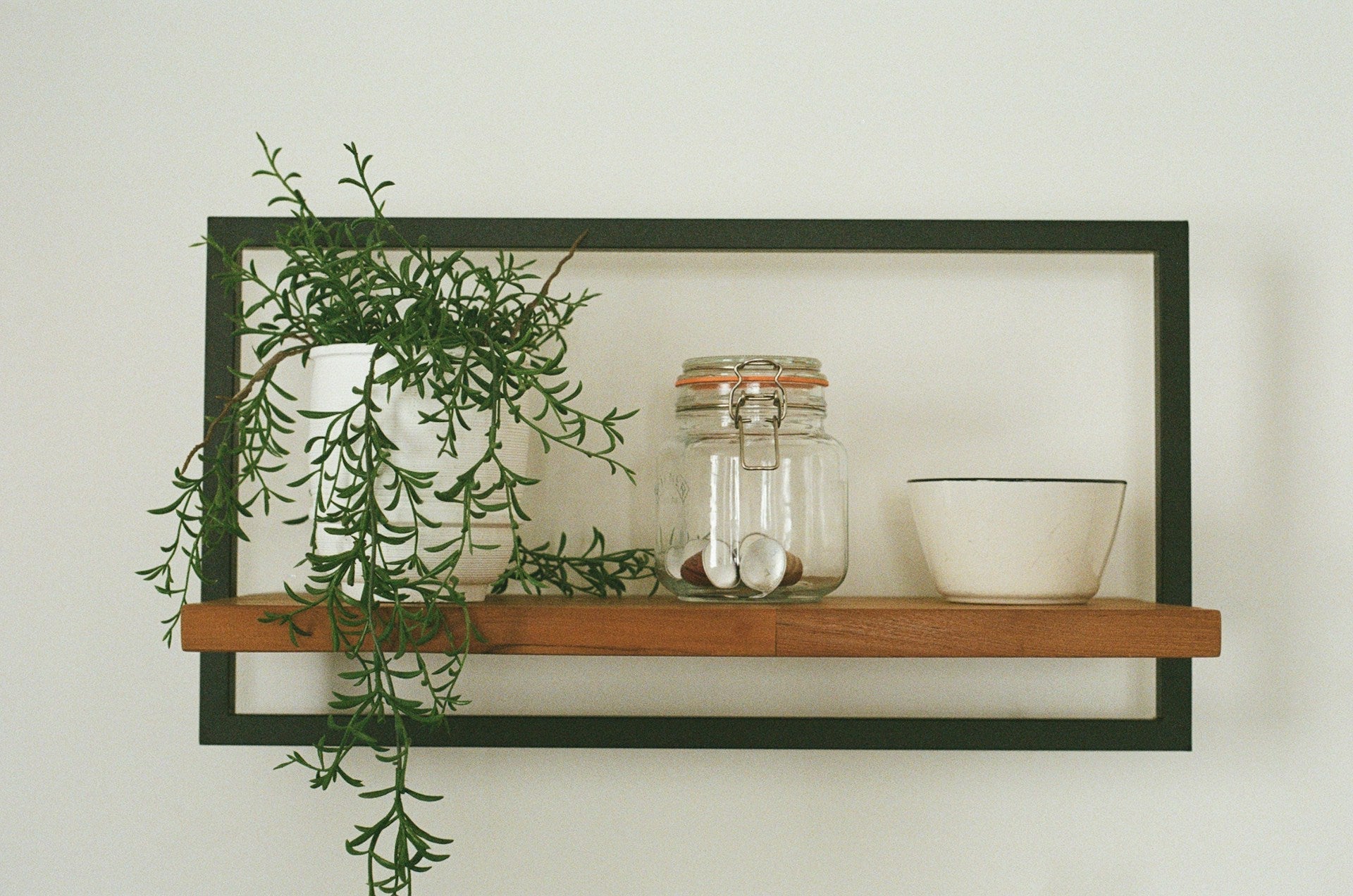
The Architect’s Guide to Floating Shelf Height That Feels Inevitable
Standard floating shelf height is a myth that refuses to retire. Hanging a plank at 60 inches from the floor does not guarantee anything except the vague feeling that someone followed a rule without asking why. Shelves live in real rooms with real humans, espresso machines, and door casings, not on a drafting template.
At The Mortise & The Hare, we treat floating shelf height as an architectural decision. It is about sightlines, proportions, and how you move through a room. When you are dealing with solid hardwood, custom-sized floating shelves and serious load capacity, this is not decor; it is permanent infrastructure. This guide walks through how high to mount a floating shelf in each room so it feels inevitable, not accidental.
Kitchen Floating Shelf Height That Serves the Espresso Machine First
Kitchen shelving begins with function, not Pinterest. If the shelf does not clear your espresso machine, the shelf is wrong. Everything else is decoration.
As a starting point, we recommend the lowest floating shelf above the counter at about:
- 15 to 24 inches above the countertop
- Closer to 15 inches for shorter users or compact appliances
- Closer to 24 inches for tall machines, generous backsplash tile, and a more open feel
Think about:
- Your height and typical reach
- Counter depth and how far back appliances sit
- Whether the shelf holds daily-use dishes or mostly display pieces
Then there is weight. Real kitchens involve:
- Heavy stoneware and stacks of dinner plates
- Cast-iron and Dutch ovens that never quite found a home
- Full pantry jars, cookbooks, and the stand mixer you pretend is “occasional use”
Most decorative brackets are fine until you stack dinner plates three deep. We build for the weight people actually store. Our shelves pair solid North American hardwood with the Hovr Bracket System (Classic and Slim), a male/female interlocking system in 6063-T6 aircraft-grade aluminum. The male bracket mounts to the wall across the studs, the female bracket is embedded inside the shelf, and a set screw locks the two together into a rigid, no-sag connection.
When installed into studs:
- A 1.75-inch-thick shelf at 8 inches deep carries an average load capacity of 300 lbs
- A 1.5-inch-thick shelf carries an average load capacity of 150 lbs
This is industry-leading strength, about 13 times stronger than standard brackets, and it solves the old problem of studs never lining up where you want the shelf. With Hovr, you place the shelf where the architecture demands, not where the framing happened to land.
For finish, we oil our shelves in Rubio Monocoat Pure, which keeps the figure of the wood visible, protects against ambient kitchen moisture, and leaves a natural, matte, open-pore surface that looks like wood, not plastic.
If you live with slippery ceramics, a Linear I-shaped gallery rail, mounted only along the front lip with no returns to the wall, adds a quiet safety edge without cluttering the line of the shelf.
For multiple kitchen shelves, plan:
- 12 to 18 inches of vertical spacing between shelves
- Tighter spacing for glassware and spices
- Taller spacing for platters, pitchers, and cookbooks
Living Room Shelf Height That Breathes Above the Couch
The living room is about visual balance. Here, shelf height is not about appliances; it is about upholstery, art, and the fact that people occasionally have heads.
For a floating shelf over a sofa, aim for:
- 10 to 12 inches above the top of the sofa back
That gap:
- Prevents head bumps when someone leans back
- Gives the wood visual breathing room
- Keeps the shelf, art, and sofa reading as one intentional composition
When you build a library wall or a stacked composition:
- Leave 12 to 18 inches of vertical space between shelves
- Let the tallest book, record sleeve, or sculptural object set the minimum
- Use tighter spacing for a gallery wall feel, more space for a true library presence
Solid hardwood custom-sized floating shelves have more visual presence than thin, flimsy boards, so they need a bit more air around them. From a seated position, you see the underside of the shelf, so proportion matters. From a standing position, you see a horizontal line sweeping the room. If you plan a long run of shelving for books, framed art, or speakers, Hovr’s no-sag, interlocking bracket keeps that line dead straight, rather than slowly slanting into a frown over time.
Bathroom and Utility Shelf Height That Respects Plumbing and Towels
Bathrooms and utility spaces are small, busy, and full of obstacles. Shelf height has to work with plumbing and daily habits.
Over a toilet, a good starting point is:
- About 24 inches above the toilet tank for the first shelf
That keeps enough room for:
- Removing the tank lid if your plumber needs access
- Storing folded towels, jars, and baskets within comfortable reach
If you love tall apothecary jars or canisters, raise the shelf slightly, but keep items within a natural arm reach so you are not stretching over porcelain with wet hands.
Shelf depth in these rooms usually lives between:
- 6 to 10 inches deep
Shallower depths keep small rooms from feeling crowded, but still hold:
- Folded towels
- Grooming kits and skincare
- Small containers and canisters
This is where custom-sized floating shelves really shine. You can cut around mirrors, outlets, and vents, and still land shelves at the exact height that clears fixtures while looking intentional.
Bathrooms are damp, which is why we favor a natural oil-style finish like Rubio Monocoat Pure. It protects the hardwood against ambient moisture while preserving a tactile, matte feel instead of a thick, glossy film. Combined with the Hovr Bracket System, you get the peace of mind that when a kid grabs a towel, or someone leans a bit too hard while reaching for something, the shelf is not going anywhere.
Hallways, Entries, and Odd Walls That Ignore Standards
Hallways, stair landings, and narrow entries are where standard floating shelf height quietly gives up. In these spaces, height is mostly about movement, sightlines, and not getting shoulder-checked by your own furniture.
For eye-level display shelves in these areas, start with:
- About 54 to 60 inches from the floor to the top of the shelf
Then adjust based on:
- Your typical eye level
- Ceiling height
- What you see from adjacent rooms
In tight walkways, deeper shelves need to sit slightly higher:
- Often 60 to 66 inches from the floor to the shelf top for deeper pieces
This keeps bags, coats, and shoulders from colliding with the edge. For long runs of custom-sized floating shelves, we like to mock up proposed heights with painter’s tape. Live with the line for a day, walk past it, and notice whether it feels easy or slightly in the way.
Whenever possible, tie shelf heights to existing architecture:
- Align with window mullions
- Match door headers or transoms
- Echo art centers or picture rails
That is how you get that inevitable feeling, where the shelf line looks like it was drawn with the house, not added afterward.
How to Decide When Your Room Breaks Every Rule
Some rooms simply refuse to behave. Ceilings are extra high, occupants are very tall or very short, or a floating shelf is secretly doing the work of a media console or nightstand. In those cases, there is a simple framework.
Work through this sequence:
- Function: What actually lives on the shelf, and how often is it used?
- Body: Who needs to reach it, and from what position, standing or seated?
- Architecture: What lines already exist that your shelf can align with or complete?
That is when you intentionally break the suggested ranges. A shelf acting as a nightstand will sit lower. A shelf doubling as a minimal media console might hug the wall under a TV. With structurally sound, no-sag hardware and truly custom-sized floating shelves, you are free to prioritize what looks and feels right, instead of chasing a mythical standard floating shelf height.
Get Started With Your Project Today
Bring your vision to life with our handcrafted custom-size floating shelves tailored to your exact space and style. At The Mortise & The Hare, we’ll help you choose the right wood, finish, and dimensions so your shelves feel like they were always meant to be there. Share a few details about your project and we will guide you through the next steps, from design suggestions to installation considerations. If you are ready to talk through ideas or special requests, simply contact us and we will follow up with personalized recommendations.
Share:
Designing Extra Deep Floating Shelves for Heavy Dinnerware
Custom Size Floating Shelves for Precise Kitchen Layouts