


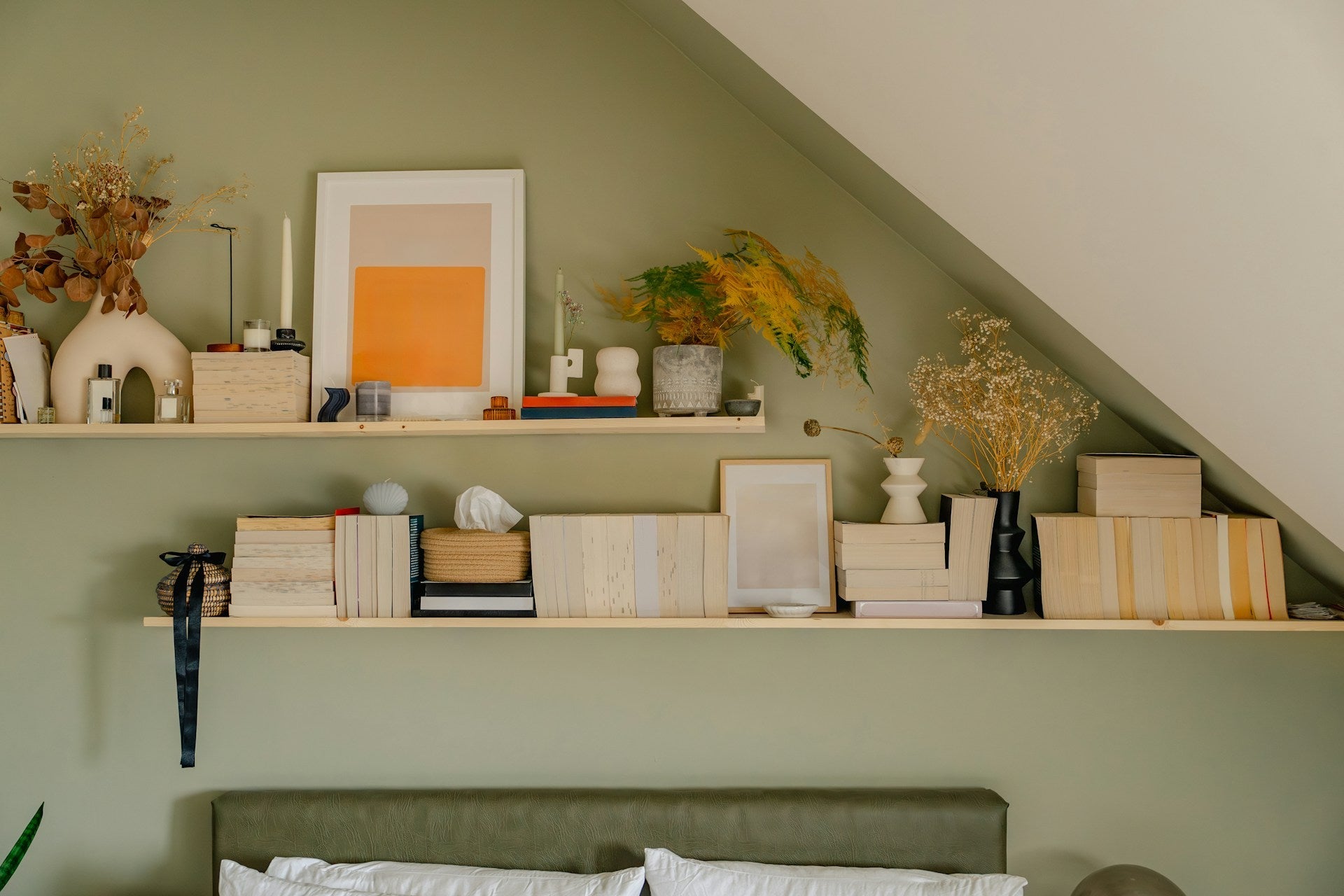
Build Floating Shelves That Actually Hold up
Strong floating shelves are not just about looks; they are about trust. When your wall is holding stacks of heavy plates, serving bowls, and glass pitchers, you want to feel calm, not nervous. That feels especially true during summer entertaining, when the kitchen and dining room are doing overtime with guests, snacks, and big family meals.
Many common floating shelves are fine for a few candles, then start to sag once real dinnerware shows up. Brackets miss studs, hardware flexes, and after a while you can see a slight tilt at the front edge. People end up spreading the heavy pieces somewhere else because the shelves feel risky when they are fully loaded.
We build extra-deep, heavy-duty wood wall shelves as part of the architecture, not as props. They are meant to carry dense stoneware, big platters, even small appliances. Our made-to-order shelves pair solid American hardwood with a patented Male/Female Interlocking System that is engineered to be 13x stronger than standard brackets and designed to stay level for the long haul.
How Deep Is Deep Enough for Dinnerware?
Depth is the first real design decision. Dinner plates, chargers, and big bowls all need more room than people expect, and they also need finger space at the front so you can grab them without dragging the stack.
Here are simple ranges we suggest when planning extra-deep shelves for dinnerware:
- Everyday dish storage: 10, 12 in. deep floating shelves
- Entertaining and serveware: 12, 14 in. deep
- Oversized platters or mixed display and storage: 14, 16 in. or more
A typical dinner plate usually feels comfortable on a 10, 12 in. shelf with a little air in front of it. Chargers and wide pasta bowls feel better on 12, 14 in. When you get into turkey platters, big cutting boards, or layered display, 14, 16 in. turns the wall into real working space instead of a narrow ledge.
Depth also changes how the room feels. Extra-deep shelves read bolder on the wall, so we like to think about:
- Ceiling height: taller ceilings can carry deeper shelves easily
- Table size: a large dining table can balance a deeper shelf above it
- Wall length: long runs can take a few deep shelves without crowding the space
Function still rules. Leave room so you are not sliding plates sideways to get them off the back row. Keep stacks at heights that feel stable, and space shelves vertically to clear tall pitchers, vases, and wine glasses, with a bit of hand clearance so nothing feels cramped when you reach.
Engineering Heavy-Duty Wood Wall Shelves for Real Loads
True heavy-duty wood wall shelves are not just thick boards with random metal stuck in the back. Strength comes from the wood species, the way the shelf is built, and how the load moves into the wall.
We work with a patented Male/Female Interlocking System. A continuous rail mounts to the wall, catching studs along the way. The matching piece is nested inside the shelf. When the two parts slide together, they lock the load to the structure of the wall instead of a few small screws in drywall.
That system spreads weight across multiple studs and across the full length of the shelf. It is engineered to be 13x stronger than standard brackets, which is a big deal when the shelves hold:
- Stacks of stoneware or porcelain
- Dense books or records in a dining nook
- Cast iron, glass drink dispensers, or heavy mixing bowls
We treat safety as part of the design. Shelves should feel rock solid when kids reach for cereal bowls, when a guest sets a tray down a little too hard, or when you line up every holiday platter you own. The interlocking rail also lets us hit studs wherever they fall in the wall while still ending the shelf exactly where the design wants it, which solves the common “studs are never where I need them” problem.
Selecting the Right Hardwood, Thickness, and Finish
Material choice matters as much as hardware. We build with American hardwoods that hold their shape over time and look at home in a dining space.
Common choices for heavy-duty wood wall shelves include:
- White Oak, strong, stable, with beautiful ray fleck in the grain
- Walnut, rich color and fine figure that reads warm and modern
- Maple, light and clean, great when you want a bright, airy feel
- Cherry, warm tone that deepens with age and catches the light softly
Thickness is both structure and style. A lean 1.5 in. profile can look crisp and modern, especially on shallower shelves or shorter spans. When shelves get deeper or runs get longer, going to 2 in. or thicker adds strength and also grounds a big dining wall visually, so the shelves feel like part of the architecture, not like temporary pieces.
For finish, we prefer natural finishes and oiling that protect from daily hands, light moisture from dishware, and seasonal humidity shifts without covering up the grain. We want the wood to do the visual work, not a thick plastic film.
White Oak gets special attention when someone wants a darker or smoked look. With careful staining, we can deepen the tone while keeping the ray fleck and figure alive, instead of flattening it. The goal is always to highlight the character the tree already has.
Laying Out Extra-Deep Shelves for Dining-Room Flow
Once depth and material are set, layout turns a plain wall into working architecture. Start with a tape measure and a simple sketch. Mark outlets, light switches, windows, and any art or sconces that must stay. Then decide how much of the wall should be shelf and how much open.
For dinnerware, vertical spacing is just as important as depth. Plan enough room for:
- Stacks of plates without feeling too close to the shelf above
- Tall stemware and pitchers
- A little open space above the tallest piece for easy grabbing
We like to think in terms of alignment and rhythm. Centering a run of shelves over a buffet or sideboard can tie the whole wall together. Using three or four shelves of the same length and thickness creates a clean line that feels intentional instead of random clutter.
Seasonal use is worth planning for too. In summer, those shelves might hold everyday plates and drinkware for casual gatherings. During holidays, the same shelves should be ready for big roasters, layered serving pieces, and special glassware. Getting length, depth, and spacing right up front keeps the wall flexible year-round.
Why Mounting Details Make or Break Deep Shelves
Mounting is where most extra-deep shelves fall short. Many hidden brackets rely on short rods or small hangers that only grab a bit of the wall. That might hold a stack of napkins, but once you load heavy dinnerware, the front starts to creep down and the whole unit can feel like it is breathing when you touch it.
With a continuous Male/Female Interlocking System, safe installation looks very different. The wall rail runs along the length of the shelf, catching multiple studs wherever they land. Heavy dinnerware loads pull straight into the studs and framing, not into the face of the drywall. The shelf and rail lock together, which keeps the unit from racking when someone leans in or sets a heavy platter toward the front.
That interlocking action is what keeps shelves level over the years. No slow nose-dive at the front edge, no wiggle when people grab something from the back row, just a firm, quiet feel every time. It is the difference between a wall that looks good on install day and a wall that still feels trustworthy after countless dinners and gatherings.
At The Mortise & The Hare, we build each shelf as heirloom-quality architectural shelving, pairing solid American hardwood with that patented Male/Female Interlocking System. When depth, hardwood species, thickness, and mounting all work together, your dining wall stops being just a backdrop and becomes a safe, hard-working part of the room that is ready for every season of hosting.
Upgrade Your Space With Long-Lasting Hardwood Shelving
Transform your walls into functional, beautiful storage with our handcrafted heavy-duty wood wall shelves. At The Mortise & The Hare, we carefully select solid hardwoods and hardware that stand up to real, everyday use. If you have questions about sizing, finishes, or installation, you can contact us for personalized guidance. Let us help you choose shelving that fits your space, style, and workload for the long term.
Share:
Floating Shelf Micro-Details: Edge Profiles, Shadow Gaps, and Hidden Hardware