


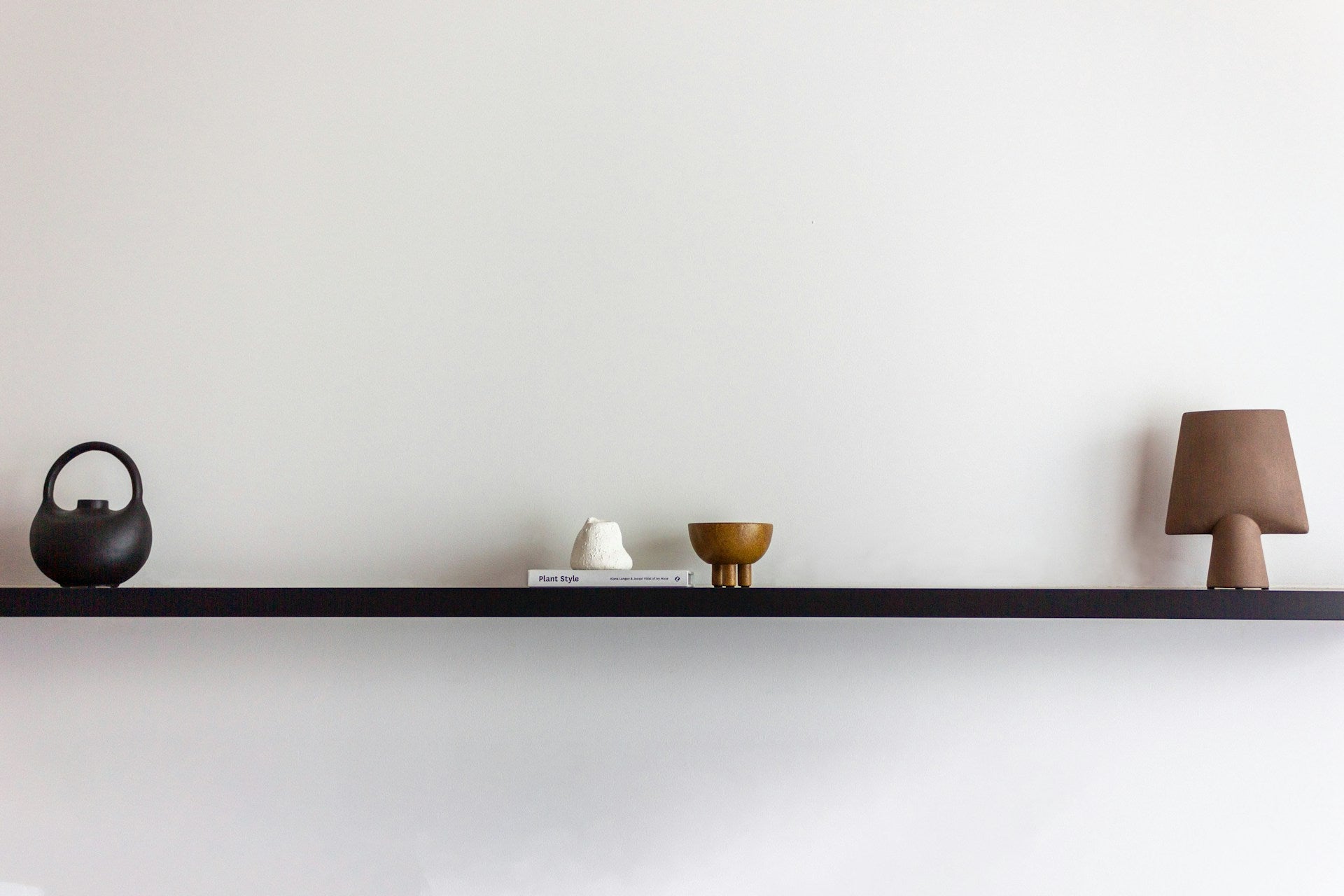
Built-in Looks Without Tearing Out Your Walls
A wall of built-ins feels calm, finished, and a little bit like quiet luxury. The good news is you can get that look with a custom hardwood floating shelf, without tearing your room down to studs or hiring a full crew to rebuild the space.
In this piece, we’ll talk through how lighting, back panels, and nearby trim can make open shelves read like they came with the house. We’ll also share how we think about structure and engineering so the shelves stay straight and solid, even when you load them up. Our goal is to help homeowners, designers, and detail-focused DIY folks plan late-summer and fall projects that look like true millwork by the time the holidays roll around.
At The Mortise & The Hare, we craft solid hardwood floating shelves here in the United States, pairing premium lumber with the Hovr Bracket System (Classic and Slim) for industry-leading strength and a no-sag guarantee. When we talk about design tricks, we are always thinking about both joinery and the architecture around it. Shelves are furniture, but they live in your walls, so they have to speak the same language as the room.
What Makes a Shelf Look Built-In
A shelf starts to feel like casework when the eye cannot quite tell where the furniture stops and the wall starts. That comes down to visual continuity and some simple geometry.
A few big cues that signal “built-in” instead of “stuck on” are:
- Straight, shared sightlines from shelf to casing or soffit
- Even reveals or shadow gaps instead of random gaps and caulk blobs
- Repeated spacing and thickness that feels more like a cabinet layout than wall decor
Shelf depth and thickness matter a lot. A custom hardwood floating shelf that is too thin can feel like a picture ledge, and one that is too deep for the room can feel clumsy. For most living rooms and kitchens, a sweet spot is a shelf that looks substantial in front view, with enough depth to hold plates or books without dwarfing the wall.
Rhythm is another quiet trick. When you:
- Keep shelf spacing consistent from top to bottom
- Align shelf tops or bottoms with nearby trim heads
- Let the top shelf line up with a soffit or ceiling element
the whole composition starts to read like it was drawn as one elevation. Wraps help as well. A shelf that turns a corner, ties into a chimney breast, or lines up with a door casing feels locked into the house, not just hung on drywall.
Designing the Wall with Back Panels, Paint, and Plaster
Once you know roughly where your shelves should sit, the wall behind them becomes your “cabinet box.” You do not have to build an actual box, but you can fake it with simple back panels and paint choices.
Back panels act like a big clue to the eye. Some options our clients use are:
- Hardwood paneling that matches or complements the custom hardwood floating shelf
- V-groove or shiplap boards installed from counter to ceiling
- A painted plywood or hardwood-veneer panel that spans the shelf area
When that panel stops at a clean line and the shelves sit in front of it, the whole thing feels like a built-in cabinet interior, even if the rest of the wall is just painted plaster.
Color and sheen are small moves that make a big difference. A few simple tricks we like in the shop:
- Match the wall color to the panel to make the shelves float quietly
- Or, use a slightly deeper tone on the panel to frame the wood and show off the grain
- Keep the wall and panel in a matte or eggshell finish so light on the hardwood feels soft, almost like a gallery
Edge details are where projects can look pro or “weekend project.” Instead of rough caulk lines, plan:
- Thin scribe strips at edges where panel meets uneven walls
- A tiny shadow gap, just a few millimeters, around the panel so it reads like a furniture part
- Straight, tight joints that stay out of the spotlight and let the wood do the talking
Using Lighting to Sell the Built-in Illusion
Lighting might be the strongest way to make a shelf look like casework. When you see softly lit objects and a gentle glow washing a back panel, your brain thinks “cabinet,” not “store-bought shelf.”
A layered lighting plan can include:
- LED strips tucked under the front edge of a shelf, shining back toward the wall
- A small channel at the back of the shelf that lets light graze the panel
- Puck lights above or between shelves to highlight special pieces
The key is to plan wiring before the wall is closed. We always recommend you talk with your electrician about:
- Low-voltage wiring routes that land right where the brackets will mount
- A hidden spot for transformers, like inside a nearby base cabinet
- Switch and dimmer locations that match how you actually move through the room
Warmth matters here. We like LEDs in the 2700 to 3000K range, which keep hardwood looking rich and natural. Aim lights so they wash the back panel and skim across the grain of the shelf. That touch of reflection on the wood figure feels like high-end cabinetry, even in a simple room.
Marrying Shelves to Adjacent Millwork and Trim
Now we zoom out and think about how the custom hardwood floating shelf talks to everything around it. When shelves line up with existing trim, they stop looking like add-ons and start reading as part of the architecture.
Good alignment moves include:
- Matching shelf height to the top of a nearby door or window casing
- Ending a shelf at the same point as a fireplace surround or column
- Letting the top shelf kiss the bottom of a crown molding with a tiny reveal
Corners and returns also matter. A shelf that dies into a side wall with no thought can feel abrupt. Instead, consider:
- Returning the shelf into a short vertical panel so it forms an L, like a true cabinet
- Insetting the shelf slightly into a niche so the drywall wraps it like a frame
- Stopping the shelf just shy of a side wall and keeping a small, even shadow line
Finish language ties it all together. A white oak custom hardwood floating shelf with a natural finish plays nicely with many trim styles, from clean modern casings to more traditional profiles. When floor, shelves, and other millwork share a tone or grain family, the whole room feels like a planned composition, not a list of separate purchases.
The Hidden Engineering That Makes It All Work
None of these visual tricks work if the shelf sags or tilts. Movement breaks the illusion of casework and puts your dishes, books, and art at risk. This is where structure is not just a safety point, it is a design tool.
We build our shelves around the Hovr Bracket System, made from 6063-T6 aircraft-grade aluminum. It uses a male and female interlocking bracket: the male bracket mounts across the wall, straddling studs wherever they land; the female bracket is buried inside the shelf. Once you slide the shelf onto the wall bracket, a set screw locks the two together into a rigid unit.
With the Classic bracket, you get an average load capacity of around 300 pounds at 8 inches of depth, roughly 13 times stronger than many standard brackets. That gives you:
- Safe support for heavy dinnerware and stacked serving bowls
- Confidence for long runs filled with books
- Stability in busy households where people lean, bump, and rest things without thinking
Because the bracket can span multiple studs along the wall, you are not stuck putting shelves only where the stud finder says. You can follow the lines that your trim, lighting, and back panels want, and still have a no-sag guarantee behind the scene. The rigid connection means the shelf cannot sag or tilt over time, unlike traditional two-prong rod-style brackets that slowly slant under load.
Planning a Casework-Look Shelf Wall for Fall
If you want your shelves up, styled, and ready before holiday guests show up, late summer is a smart time to start planning. When we lay out a wall of shelves with clients, we usually work through a simple sequence:
- Measure the wall and note nearby doors, windows, and mantels
- Decide how many shelves you want and the spacing between them
- Choose your hardwood species and general finish mood, light, mid, or dark
- Plan your back panel or wall treatment and any lighting zones
- Sketch how shelves will land relative to existing trim or new millwork
When you work with a maker or designer, share elevations, inspiration photos, and what you plan to store. That helps us size each custom hardwood floating shelf correctly and match it with the right Hovr Bracket System: Classic for heavy loads and deeper shelves, or Slim where profiles are tighter and loads are lighter. We also like to see nearby millwork details so the shelves arrive ready to sit in that larger story.
At The Mortise & The Hare, we care about that blend of refined aesthetics and engineered performance. A wall of solid hardwood floating shelves that read like built-ins is not magic. It is careful planning of sightlines, surfaces, light, and structure, all working together so the room feels calm, strong, and quietly finished when the colder months roll in.
Elevate Your Space With Bespoke Floating Shelves That Last
Transform your walls with a handcrafted custom hardwood floating shelf designed to fit your exact style and dimensions. At The Mortise & The Hare, we carefully select premium hardwoods and precision-build each piece for strength, beauty, and longevity. Share your measurements, finish preferences, and design ideas so we can create shelves that look built-in, not bought off the shelf. If you have questions or need guidance before ordering, please contact us and we will walk you through every step.
Share:
Custom Depth Wall Shelf Decisions for Seamless Kitchen Sightlines