


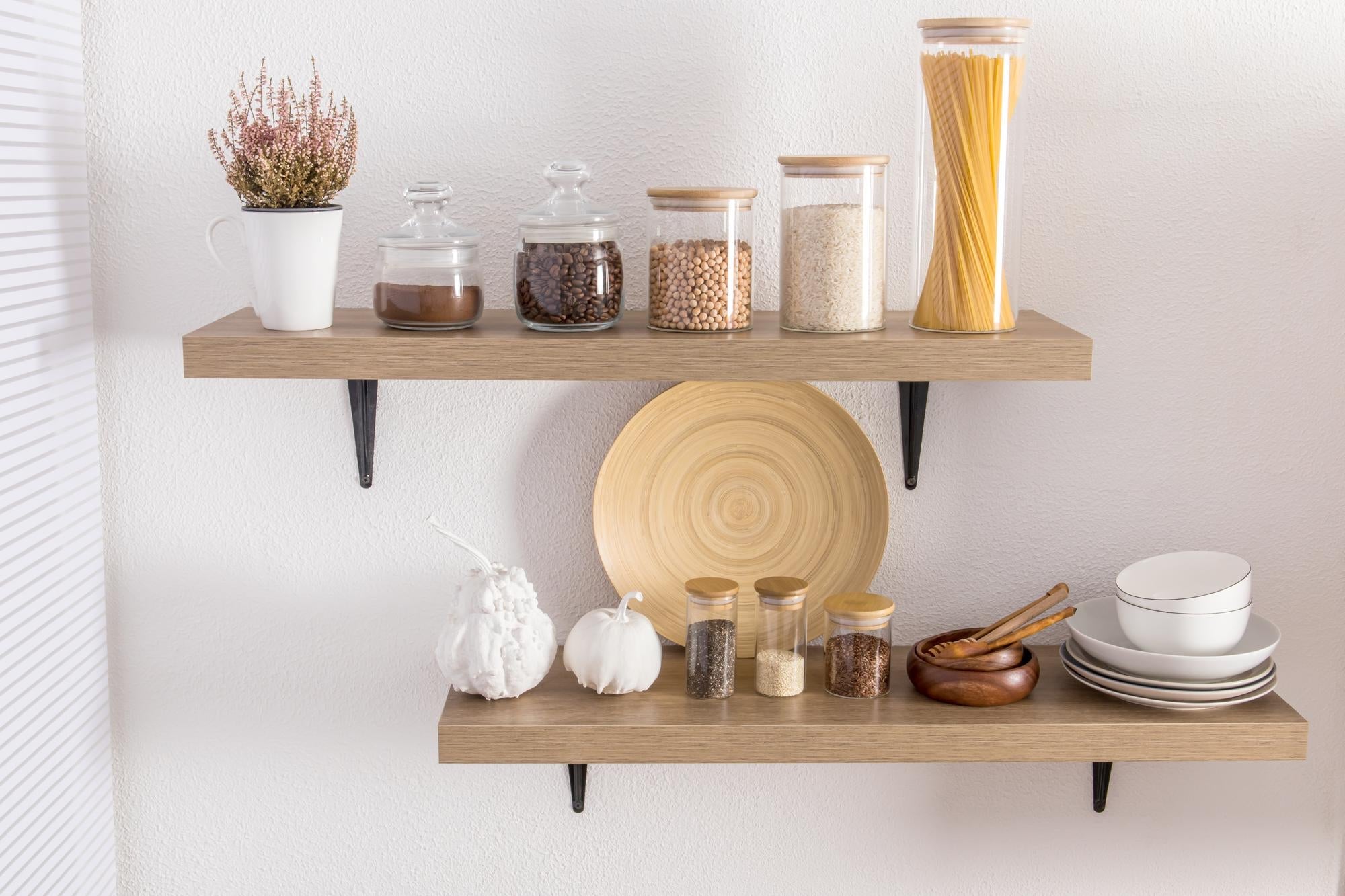
Architectural Floating Shelves in Modern Kitchens
Architectural floating shelves can change how a kitchen feels and works. They are not just a place to set bowls; they are part of the structure of the room, just like cabinets, trim, and the backsplash. When they are planned well, they pull the whole wall together and make the space feel calm, open, and intentional.
Spring and early summer are when many homeowners start kitchen projects, so it is a great time to think about shelves as part of the architecture, not an afterthought. An architectural shelf has the right thickness, proportion, and shadow line. It lines up cleanly with cabinets and tile and looks like it has always belonged there. In our shop at The Mortise & The Hare, we build solid American hardwood shelves around those details, pair them with the Hovr Bracket System, and focus on long-term performance, not quick trends.
Choosing the Right Hardwood for Architectural Floating Shelves
The wood species you choose will set the mood of your kitchen wall. Different hardwoods react to light, stone, and paint in their own way.
Here is how some popular options tend to read in kitchens:
-
White Oak: clean, modern, and warm, works beautifully with both light and dark cabinets
-
Walnut: rich and deep, adds contrast against white or light gray cabinetry
-
Cherry: warm and inviting, slowly deepens in color with time and sunlight
-
Maple: light and smooth, great for bright, airy spaces and soft modern designs
We also care a lot about how each board is selected. Grain direction, end grain, and any figure in the wood should feel calm and intentional. On an architectural shelf, you do not want wild, random boards, you want flow. We look at:
-
Grain orientation along the length of the shelf
-
How the end grain will look from the side view
-
Where any character or figure falls so it feels balanced
Thickness and depth matter too. Too thin and the shelf looks flimsy next to full-height cabinets. Too thick and it can feel clunky over a delicate backsplash. Most modern kitchens land in a sweet spot where the shelf is deep enough to hold dinner plates but still looks light on the wall.
Because kitchens live with steam, humidity, and temperature swings, we build with solid hardwood instead of particle board or MDF. Real wood, properly constructed, handles these changes far better. The way we glue up and orient boards helps prevent warping or cupping over time, so the shelves stay straight while the seasons change.
Finishes That Elevate Modern Kitchen Architecture
Finish is where the wood and the rest of the kitchen start to speak the same language. We keep finishes simple, durable, and honest so the grain can do the talking.
In most kitchens, we end up working with:
-
Natural oil finishes that soak into the wood and keep a soft, low sheen
-
Low-sheen clear coats that add protection in high-use areas like near sinks and ranges
Around splash zones, like coffee bars and prep areas, a clear coat often makes the most sense. It gives a bit more protection from drips and daily wiping while still keeping the grain visible. A natural oil finish can be wonderful in spots that are more about display and feel, such as open shelves near a seating area.
White Oak gets special attention. Designers often ask for smoked, driftwood, or gallery-style tones. Instead of burying the wood in heavy color, we use light staining approaches on White Oak that keep the grain crisp and clean while nudging the tone warmer, cooler, or softer.
When you are planning finishes, think about how the shelves relate to:
-
Cabinet color and sheen
-
Countertop material and edge detail
-
Flooring tone and texture
-
Island details, especially if there are wood accents
Wood will gently patina over time, especially in a sunlit kitchen. We like to plan for that, so the shift feels natural, not like the shelves aged away from everything else.
Integrating Lighting, Backsplashes, and Hidden Strength
Lighting is a big part of why architectural floating shelves feel built-in. Under-cabinet LEDs can turn a plain wall into a warm, layered surface.
Start by thinking about what the light needs to do:
-
Task lighting over counters so you can chop and prep safely
-
Accent lighting to highlight objects or art on the shelves
-
A soft evening glow that feels calm instead of harsh
We route channels into the underside of the shelves for LED strips and diffusers, which helps avoid bright dots or hot spots on shiny counters. Wire paths are planned so the shelf still looks refined from every angle. The goal is to make the light feel like part of the wood and tile, not a plastic add-on.
Color temperature matters too. Warmer LEDs usually flatter natural wood tones and pair nicely with stone, zellige, marble, quartz, and handmade tile. Cooler light can make some woods look flat or washed out, especially darker species like Walnut. A soft, warm white often brings out texture in tile and grain without glare.
Behind all of this, the hardware needs to disappear. We standardize on the Hovr Bracket System, both Classic and Slim, for every floating shelf we build. It uses 6063 T6 aircraft-grade aluminum in a Male/Female Interlocking System. The male bracket mounts to the wall and can straddle studs, the female bracket is embedded in the shelf, and they lock together with a set screw.
That interlocking connection delivers an average load capacity of 300 pounds on an 8-inch-deep Classic bracket and is 13x stronger than standard brackets. It is truly industry-leading strength, and we back it with a No-Sag Guarantee: unlike traditional 2-prong rod brackets that slant over time, the Male/Female Interlocking System creates a rigid connection that cannot sag or tilt.
That level of performance is a safety feature as much as a design detail. It is safe for heavy dinnerware, massive book collections, and the everyday bumps of busy households and working kitchens. It also lets us hit clean sightlines because we are not locked into wherever the studs happen to fall. We can secure into studs nearly anywhere along the run and still maintain the exact shelf layout the design calls for.
Designing Around Tile, Corners, and Real-World Details
Architectural floating shelves have to play nicely with tile and corners. We like to think about the backsplash and shelves as one composition.
For backsplash pairings, consider:
-
Where the tile stops, at the bottom of the shelf or all the way behind it
-
Lining up grout joints with shelf elevations when it makes sense
-
Using shelf thickness to echo countertop edges or window trim
Corners and long runs need extra planning. You may choose to:
-
Wrap shelves around a corner with careful miters and aligned grain
-
Stop short of the corner for a lighter, asymmetrical look
-
Break a long wall into multiple shelves that still feel like one continuous band
Support, grain direction, and the Hovr brackets all work together so long runs feel monolithic but still safe and practical.
Finally, real kitchens have outlets, cable boxes, and under-cabinet fixtures. Part of the design work is hiding that visual noise. We often plan shelf placement and depth so outlets fall just above the counter but below the shelf line, or we bury small components behind the shelf so they are there when you need them and gone when you look at the wall as a whole.
Bringing Architectural Floating Shelves Into Your Next Kitchen
When homeowners and designers come to us from across the country and here in our own region, we like to keep the planning process simple. Before demolition, it helps to:
-
Measure wall lengths and note window and hood locations
-
Decide on shelf thickness and depth based on what you want to store
-
Choose species and finish direction alongside cabinet and countertop samples
-
Talk with your electrician about LED locations and any hidden wiring you want
Late spring and early summer are a smart time to lock in those details, so shelves are ready when cabinets, tile, and counters go in. That timing helps avoid last-minute changes and keeps the whole wall reading as one clear architectural idea.
At The Mortise & The Hare, we build heirloom-quality, solid hardwood floating shelves with the Hovr Bracket System as our backbone, so the design you carefully plan today will still feel strong, straight, and intentional for the long haul. When the wood, finish, lighting, and hardware all work together, architectural floating shelves stop being "just shelves" and become one of the best parts of your kitchen.
Transform Your Space With Custom Architectural Details
Elevate your home with the warmth and character of our handcrafted architectural floating shelves designed to fit your style and your walls perfectly. At The Mortise & The Hare, we work closely with you to choose the right hardwoods, finishes, and dimensions so every shelf feels intentional and built to last. If you have questions about sizing, load capacity, or custom options, simply contact us and we will help you plan your next project.
Share:
Floating Shelves for Home Libraries: Book Depth, Spacing, and Anti-Sag Bracing
Designing Minimalist Wood Shelves for Modern Rooms