



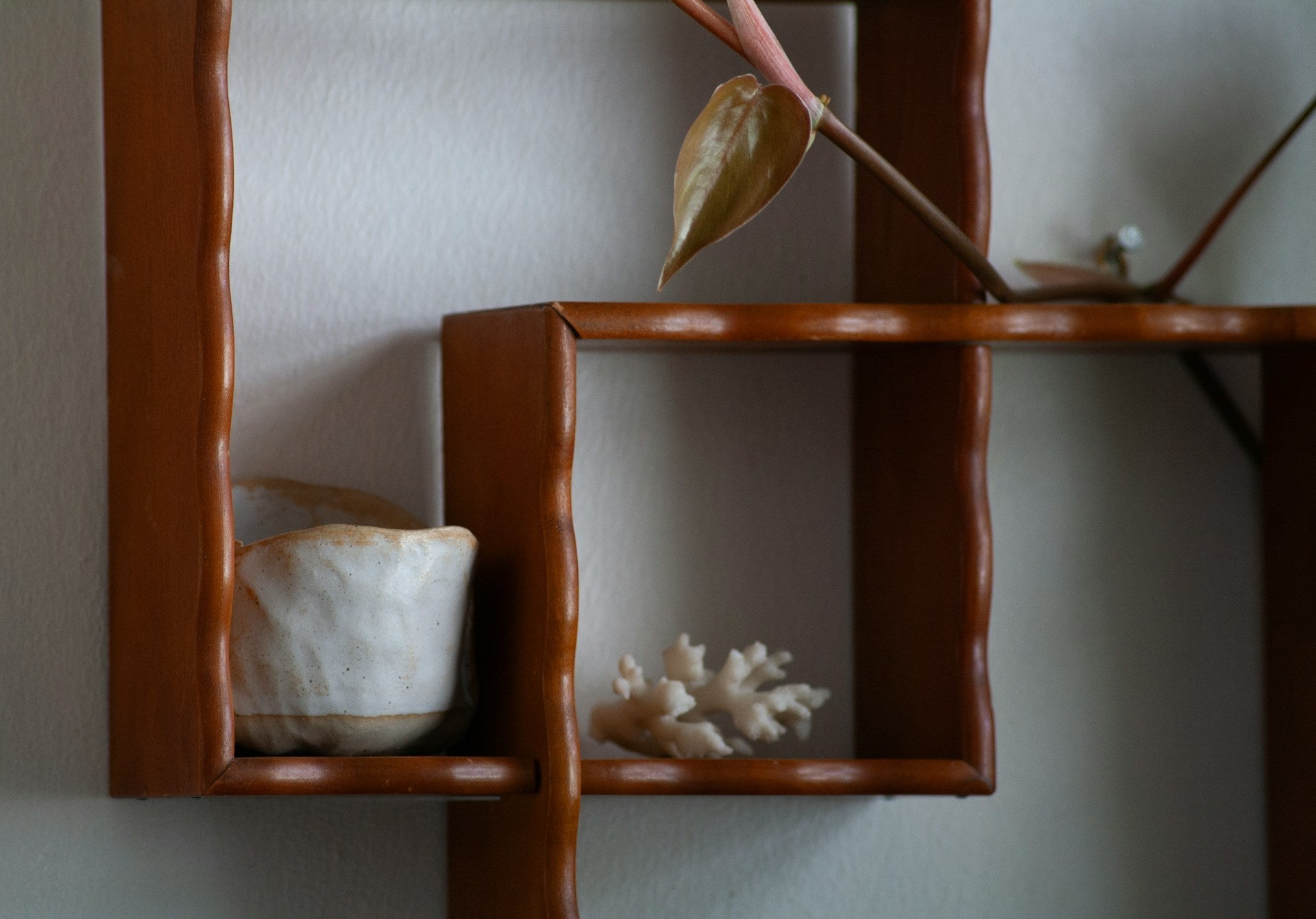
Stop Guessing Shelf Fit and Start Controlling It
Ordering custom wood shelves online can feel like a gamble. The numbers look fine on the screen, the finishes look beautiful, then the boxes arrive and something is just off. Maybe the shelf is a touch too long and hits the tile edge, or a little too short and leaves a weird gap that catches your eye every time you walk by.
With floating shelves, fit is not a small detail. It decides whether your tile lines stay clean, your reveals around windows look intentional, and your shelves sit in harmony with a range hood, stone fireplace, or built-ins. Even a simple 1/8 inch error can read as cheap in a room that is otherwise carefully designed.
We build shelves and mantels all day, so we think about fit constantly. In this guide, we will walk through how we measure, how we think about structure and hardware, and how you can order custom wood shelves online with the same level of control a cabinetmaker expects in the shop. Late summer is a perfect time for this, when kitchen and living room projects are wrapping up before fall gatherings and holiday hosting. Get the planning right now, and your shelves will be up and settled long before guests arrive.
Planning Your Space Before You Order Custom Wood Shelves
Before thinking about wood species or finish, start with how the shelves will live in your space. Use and load come first.
Ask yourself what these shelves actually need to do:
- Display light decor, framed photos, and candles
- Hold daily dishes and glasses in place of upper cabinets
- Carry heavy art books or records in a library wall
- Frame a TV and speakers in a media setup
Different jobs call for different sizes. For example, open kitchen uppers that hold plates usually want a bit more depth. A media wall might need deeper, thicker shelves so the proportions feel right next to a TV. A mantel over a fireplace often looks better a little taller in profile so it holds its own against stone or brick.
Next, look at the architecture already in the room. Your walls and millwork tell a story if you slow down and read them:
- Tile lines on a backsplash that you might want the shelf to align with
- Window casings that set where a shelf should stop so it does not fight the trim
- Cabinet runs that suggest a clear start and stop point
- Stone or brick edges that call for a small, clean reveal
Wall construction matters too. Stud spacing is rarely perfect, and there might be plumbing or wires hiding behind the drywall. This is where hardware choice shapes design. The Hovr Bracket System (Classic and Slim) uses a male/female interlocking system in 6063 T6 aircraft-grade aluminum. The male rail mounts to the wall and can span several studs, so you can fasten securely wherever the studs fall, but still place the shelf exactly where the design needs it. The female rail is embedded inside the shelf. The hardware works with your layout instead of forcing you to follow random stud placement, and it lets you get secure stud installation anywhere along the wall, even when the studs are not where you would ideally place the shelf.
Measuring Like a Cabinetmaker, Not a Website Form
Once the plan is clear, measuring is where you turn a nice idea into a dialed fit. Think of it less like filling in a form and more like taking careful shop notes.
For length and depth, start by deciding if you are measuring to finished surfaces or bare framing. If your tile or stone is not installed yet, you will want to account for its thickness. Always measure in at least three spots:
- Left side
- Center
- Right side
Walls are rarely perfect. Using the tightest number protects you from a shelf that binds at one end. A slightly shorter piece with a clean, tiny reveal looks intentional. A shelf that is forced in or bows the wall looks wrong.
Reveals and clearances are small on paper but big to the eye. You might want:
- A 1/16 to 1/8 inch reveal to a tile edge or stone return
- Space to clear cabinet doors or trim
- A consistent gap left and right so the shelf looks centered
For height and alignment, pick visual anchors. Good reference lines include:
- Bottom of upper cabinets
- Lower edge or trim detail of a range hood
- Centerline of a TV
- Top of a fireplace opening
Translate what you see in your inspiration photos into numbers on the wall. A laser level is helpful, but a long level and some painter’s tape can also mark heights cleanly. This level of detail turns the idea to order custom wood shelves from a gamble into a controlled, predictable process.
Choosing the Right Wood and Profile for Long-Term Stability
With measurements in hand, you can choose materials that will stay straight and solid over time. We work with solid American hardwoods like White Oak, Walnut, Cherry, and Maple because they have character and they behave well when they are properly dried and built.
Each species has its own look and personality:
- White Oak: strong, calm grain, great when you want a natural feel or a stained look
- Walnut: rich, dark, and warm, with deep color and lively figure, beautiful under a clear natural finish or oil
- Cherry: soft glow that deepens with age, very classic in traditional homes with a natural finish
- Maple: light and clean, works well in modern and minimal spaces with a clear, natural finish
Thickness, span, and grain direction are about more than style. A deeper shelf that carries dinnerware needs more stiffness than a shallow accent shelf with a plant. A thicker profile helps fight sag, which is why we pay attention to the end grain and how the board is sawn. That helps the shelf resist cupping and keeps the lines crisp in busy rooms like kitchens and living areas.
Finish plays a part too, especially as seasons change from humid summers to dry indoor heat. Natural finishes and oils that respect the species let the wood move gently without looking stressed. White Oak is a strong choice when someone wants a stained look with good stability through those humidity swings.
Hardware Is the Hidden Difference Between Fine and Flawless
You can do everything right with planning and still lose the battle if the hardware is weak. A lot of floating shelves rely on simple 2-prong rod brackets. Those rods concentrate weight in a few spots, and over time that often invites sag or wobble.
We use the Hovr Bracket System (Classic and Slim) because its male/female interlocking system spreads the load across the full length of the shelf. The male rail, made from 6063 T6 aircraft-grade aluminum, mounts to the wall and can straddle multiple studs. The female rail is embedded inside the shelf itself. When you slide the shelf on, the male and female parts interlock, then a set-screw locks them together to remove play and racking.
The Classic Hovr bracket averages around 300 pounds of load at an 8-inch depth, which delivers industry-leading strength and is 13x-stronger than standard brackets. That strength is a safety feature as much as a convenience, and it translates into peace of mind in real life:
- Heavy stoneware and daily dinnerware stacked on open kitchen shelves
- Massive book collections in long runs of cookbooks or art books
- Bar setups with bottles and glassware that stay put
- Busy households where kids lean or even sit where they are not supposed to
Because the rails are continuous and adjustable, they also make final leveling easier. You can fine-tune the fit on the wall, which matters when you want perfectly aligned shelves ordered online to look like they were built in place.
From Screen to Wall with Cabinetmaker-Level Fit
When we take a custom order, we do not just plug your numbers into a machine. We look at your dimensions, the photos or drawings you share, and how you say you want to use the shelves. If a span or planned load looks risky, we talk about thickness, depth, and whether the Classic or Slim Hovr bracket is the right match.
In the shop, we mill the joinery to house the female bracket cleanly inside the wood. We check flatness, square the corners, and dry-fit the shelf to the hardware before anything goes in a box. That way, the pieces that arrive at your door already work together as a complete system.
You receive clearly labeled shelves and brackets, layout notes, and straightforward guidance. A seasoned contractor will feel right at home with the process, and a careful DIYer will have a clear roadmap. Ordering in late summer gives you time to install, make small paint touchups, and let everything settle well before the fall and winter gatherings.
When planning, measuring, material choices, and the right bracket system all line up, ordering custom wood shelves online does not mean giving up on fit. It can actually give you more control than pulling something off a shelf in a store, because every detail is shaped around your walls, your load, and your idea of what a finished space should look like. At The Mortise & The Hare, every solid hardwood shelf and mantel we build is made to order in the United States around the Hovr Bracket System (Classic and Slim), so what you get is not just a beautiful piece of wood, but an industry-leading, structural solution ready for real life and for the way you actually use your home.
Get Started With Your Project Today
If you are ready to bring your shelving ideas to life, we make it simple to order custom wood shelves that fit your space and style. At The Mortise & The Hare, we carefully select hardwoods and finishes so your shelves look great and last for years. Share your measurements and vision with us, and we will guide you through the best options for your home. If you have questions before getting started, you can contact us for personalized help.
Share:
Custom Depth Wall Shelves for Japandi, Scandi, and Minimalist Rooms
Custom Depth Wall Shelves for Japandi, Scandi, and Minimalist Rooms